At a glance
- Vines are grown in pits dug in volcanic ash, a centuries-old technique that uses the exceptional properties of volcanic ash.[1]
- The Timanfaya eruption lasted six years and covered 23% of Lanzarote in fresh lava and spatter. The vineyards were planted into that ash.[2]
- A warm climate all year round with an average annual temperature of about 21ºC, plus steady north-east trade winds.[3][4]
- The tour booked from this site runs 2 - 3 hours from US$173, in a small group limited to 10 participants, with pickup available.[5]
- Drivers need to be 20 or older, with a driving licence held for two years or more on this tour.[6]
- Top choice Off-Road Volcano Buggy Tour from US$173 Duration2 - 3 hours[5]Ratingrated 4.67 from 5,246 reviews[5]Guide languagesCatalan, English, French, Spanish[5]CancellationCancel up to 24 hours in advance[5] Check availability
- Can-Am Trail Buggy Tour from US$196 Duration3 hours[7]Ratingrated 4.54 from 243 reviews[7]Guide languagesEnglish, Spanish[7]CancellationCancel up to 24 hours in advance[7] See this tour
- On-Road Buggy Volcano Tour from US$207 Duration2.5 hours[8]Ratingrated 4.58 from 627 reviews[8]Guide languagesEnglish, Spanish[8]CancellationCancel up to 24 hours in advance[8] See this tour
In Lanzarote, the vines are grown in pits dug in the volcanic ash; a centuries-old technique that takes advantage of the exceptional properties of volcanic ash.
A buggy seat is a good way to read the wine country
Booking and getting there
Why Lanzarote Wine Grows in Black Ash
The vineyards you pass on the buggy route do not look like vineyards at first. There are no long rows of trellised vines climbing a hillside, and not much green to speak of. What you see instead is a field of shallow bowls scooped out of black gravel, each one holding a single low bush, with a curve of stone stacked around one side. Until the guide explains it, the whole slope reads more like a quarry than a wine region.
La Geria is the name for this landscape. Vines are grown in pits dug in volcanic ash, a centuries-old technique that takes advantage of the exceptional properties of volcanic ash.[1] The ash layer is not decoration. It sits over the soil and slows evaporation, so the ground below keeps more of whatever moisture the night air leaves behind. The stone curves take the edge off the wind before it can strip the leaves and flowers.
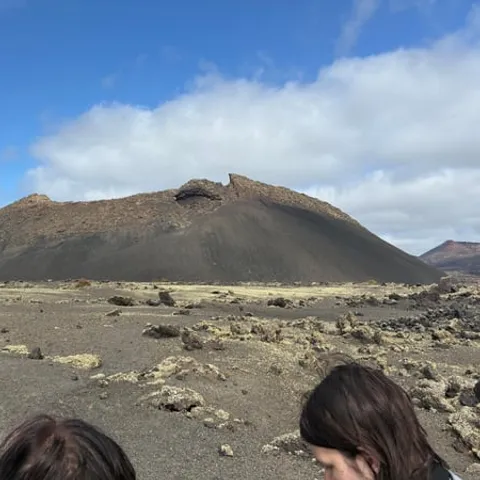
The black ground came from the eruptions that reshaped the island. The Timanfaya eruption lasted six years and covered 23% of Lanzarote in fresh lava and spatter.[2] In time, ash fields became farmland, and planting into the ash is still the method used across La Geria. Nothing about it is industrial: the plots are small, the walls are hand-stacked, and the vines are worked on foot.
The Hand-Dug Pits and the Stone Crescents
From the track you can read the shape of the work. Each pit is a funnel dug by hand through the ash until the digger reached soil, then partly filled again so the vine sits in a hollow below the surrounding surface. A wall of volcanic stone is stacked in a curve on the side the wind arrives from. Multiply that by thousands and you have the pattern that covers the slopes of La Geria.
The vines are kept low and wide, close to the ground, so the hollow and the wall shelter them together. Walking between the pits would be slow work, up and down over loose ash. From a buggy on a dirt road the geometry reads clearly: hollows, stone curves and thin lines of green against black gravel, repeated until the slope runs out of room.
Everything is dry stone, made from the same lava the fields are dug into, so the picture is black, grey and green with almost nothing else in it. Photographs taken from the passenger side come out well in low sun, when the crescents throw shadows and the pits show their depth. In flat midday light the same view collapses into a single dark texture.
Green vines in black ash, the signature look of Lanzarote wine country
Enarenado: Growing in Ash Instead of Soil
Enarenado is the local name for the layering that makes farming possible here: a pit or trench, a pocket of soil or compost, and a cap of volcanic ash over the top. The vine does not feed on the ash directly. The ash works as a cover, keeping the sun off the damp ground underneath and letting air and rain move through slowly, which suits ground that sees little rainfall and a lot of wind.
The same idea turns up in the smallholdings between the lava flows, where ash is spread over beds and rows in the same way. Fig trees, cactus and vegetables come out of what looks like gravel. On the buggy route, this is the farmland that flashes past between one stretch of bare lava and the next.
You can pass this kind of planting without noticing it. A bed of grey ash with green shoots pushing through looks like rough ground from a distance, and only up close do the rows and the little channels show up. Ash is also spread around young trees and in gardens, and that is one reason so much of the island reads as a single shade of grey.
Malvasia and the Other Grapes on the Slopes
Malvasia is the grape most closely associated with Lanzarote, and you will see the name on bottles and winery signs around the island. It is a white grape that copes with heat and wind. Red varieties are planted as well, and white grapes go into dry wines and into sweeter styles made from grapes left to dry in the sun.
What a vineyard produces depends on the year and on the pocket of land it sits in. Slopes, older ash fields and lower terraces ripen differently from one another, and the same grape can taste unlike itself a few kilometres away. If you taste something you like during your stay, the name on the label usually tells you which part of the island it came from.
A winery visit and a buggy ride make a good pair on different afternoons. At a winery you can stand beside the pits and hear how the harvest is handled and how the ash is maintained. From the buggy you see how the planting fits the shape of the land, spread across slopes and hollows you would not reach on foot in a short visit.
from US$173
The off-road volcano buggy tour runs 2 - 3 hours, with pickup available and free cancellation up to 24 hours before.[5]
Farmland and Villages Between the Volcanoes
The island is not especially high. Peñas del Chache, the tallest mountain on Lanzarote, stands 672 meters (about 2,205 feet) above the sea.[10] Much of the wine country sits on rolling ground rather than steep slopes, so the fields spread sideways across the ash instead of climbing. From a buggy seat you notice how the tracks follow the contours of the land.
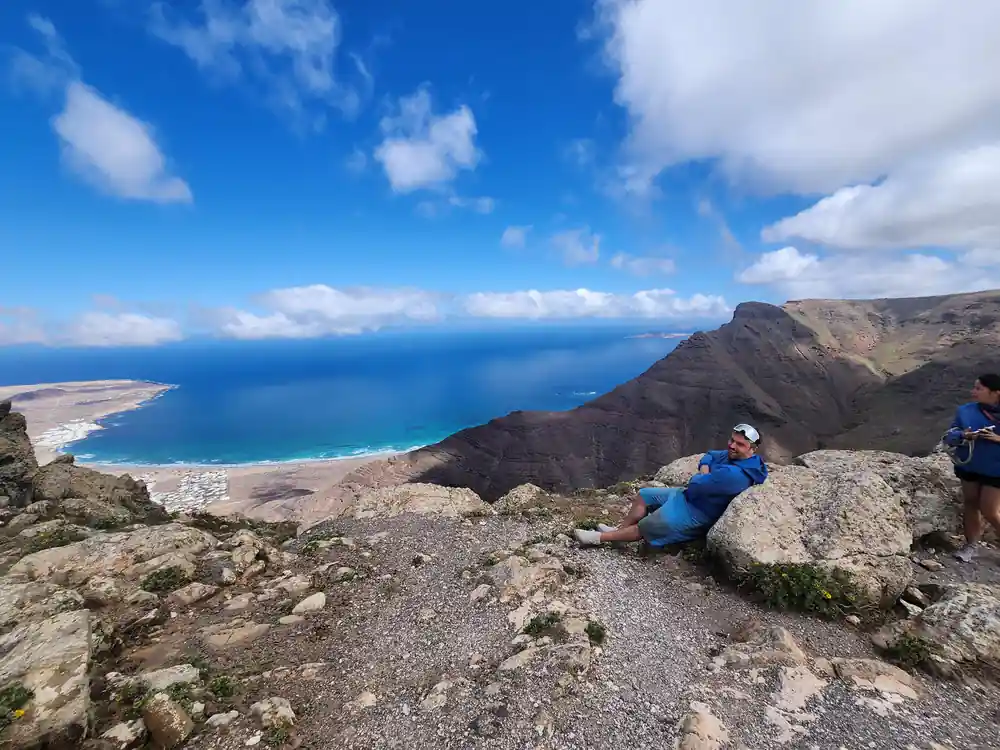
Lanzarote is listed as a UNESCO Biosphere Reserve, comprising the northernmost island of the Canary Archipelago and the northern islets.[11] The villages out among the fields are small, low and whitewashed, and most of the land between them is lava, ash field or working farmland. Walls of dark stone divide the plots, and there is very little green that is not cultivated.
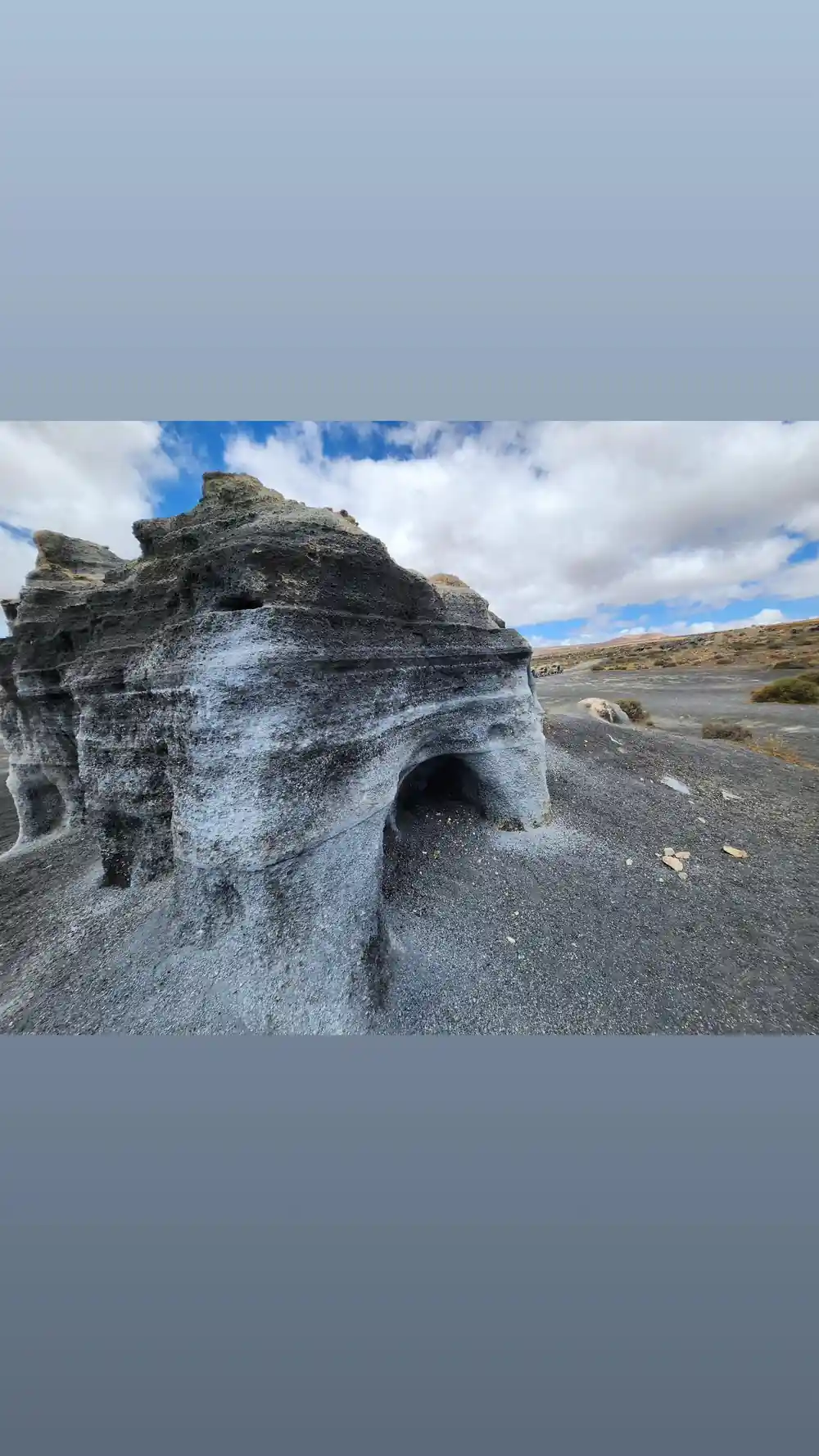
Away from the vines, the south-west coast shows what the same lava did at the water's edge. Los Hervideros is a stretch of dramatic black lava cliffs where the Atlantic surges into a labyrinth of sea caves and blowholes.[12] Near Yaiza, the crater of an extinct volcano submerges into the Atlantic to form the Charco de los Clicos, the Green Lagoon, a Natural Reserve.[13]
What the Buggy Drive Feels Like
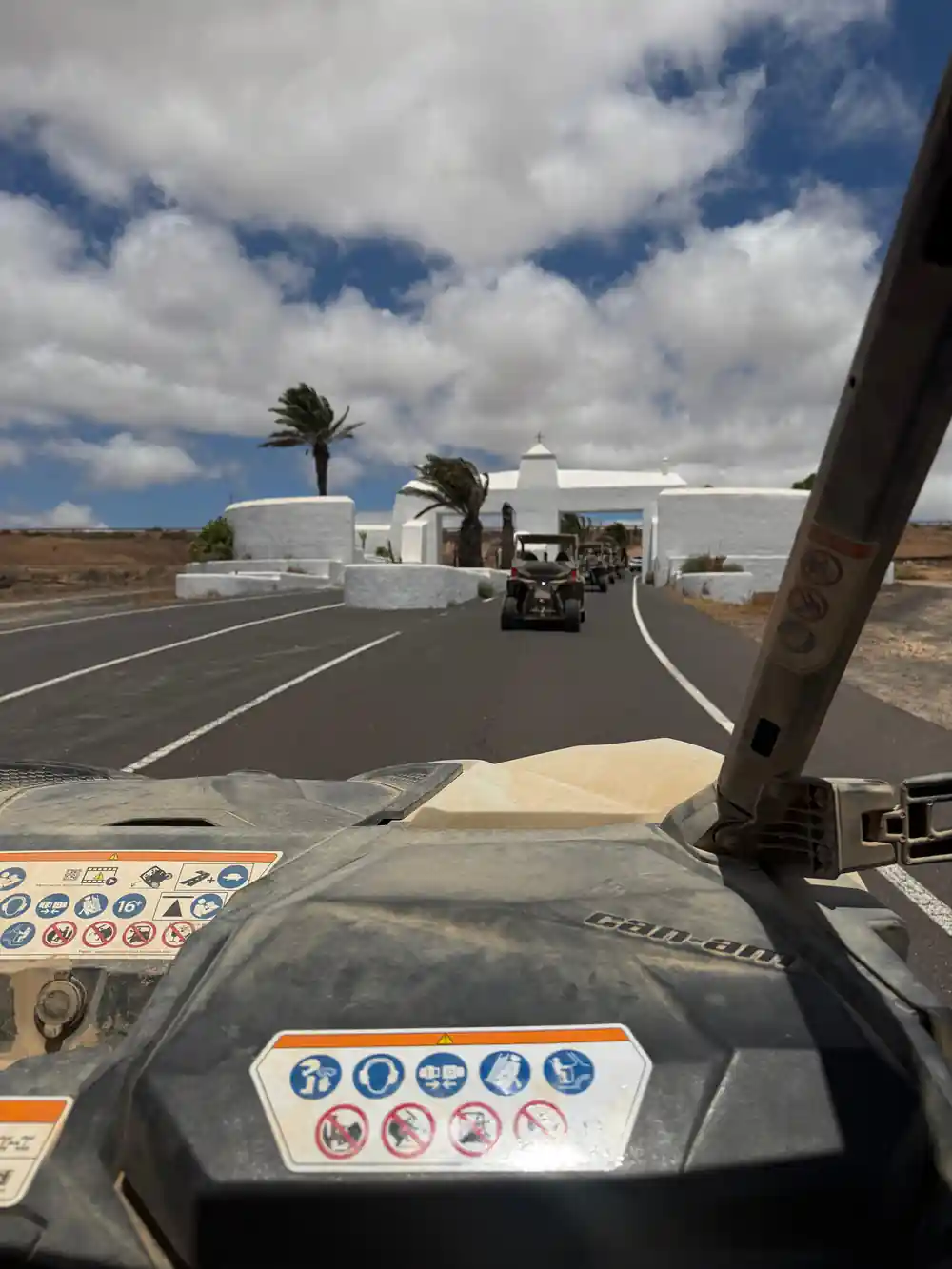
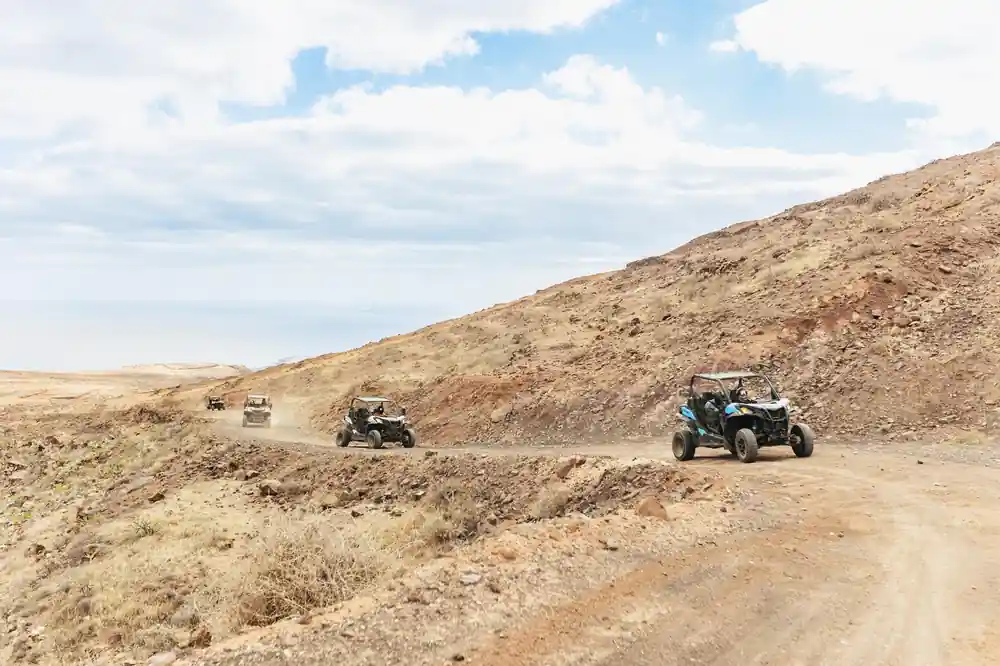
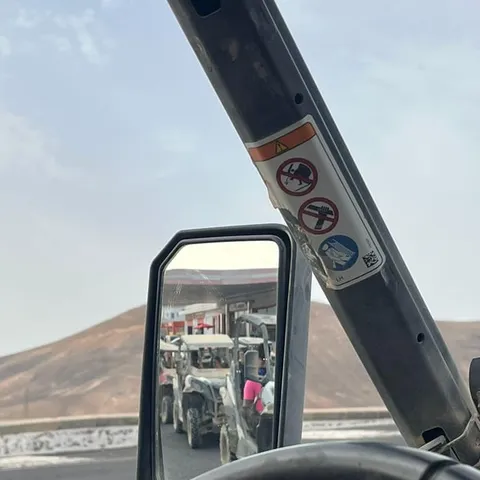
The tour booked from this site has a duration of 2 - 3 hours and starts from US$173.[5] It runs off road, so expect dust, a rough track and a fair amount of noise. Groups are small, limited to 10 participants, and a live tour guide speaks Catalan, English, French or Spanish.[5] Pickup is available; check availability for pickup options.[5]
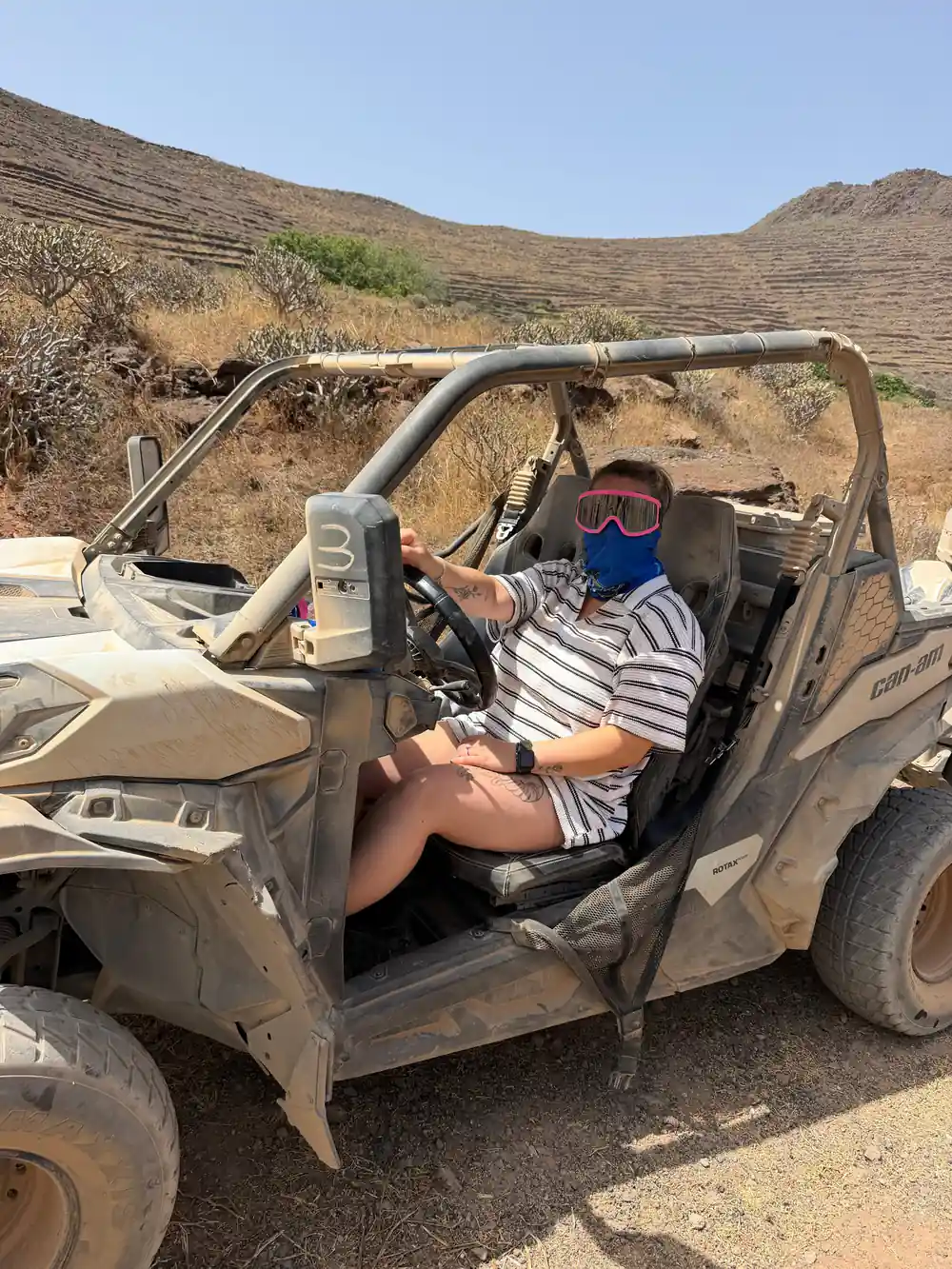
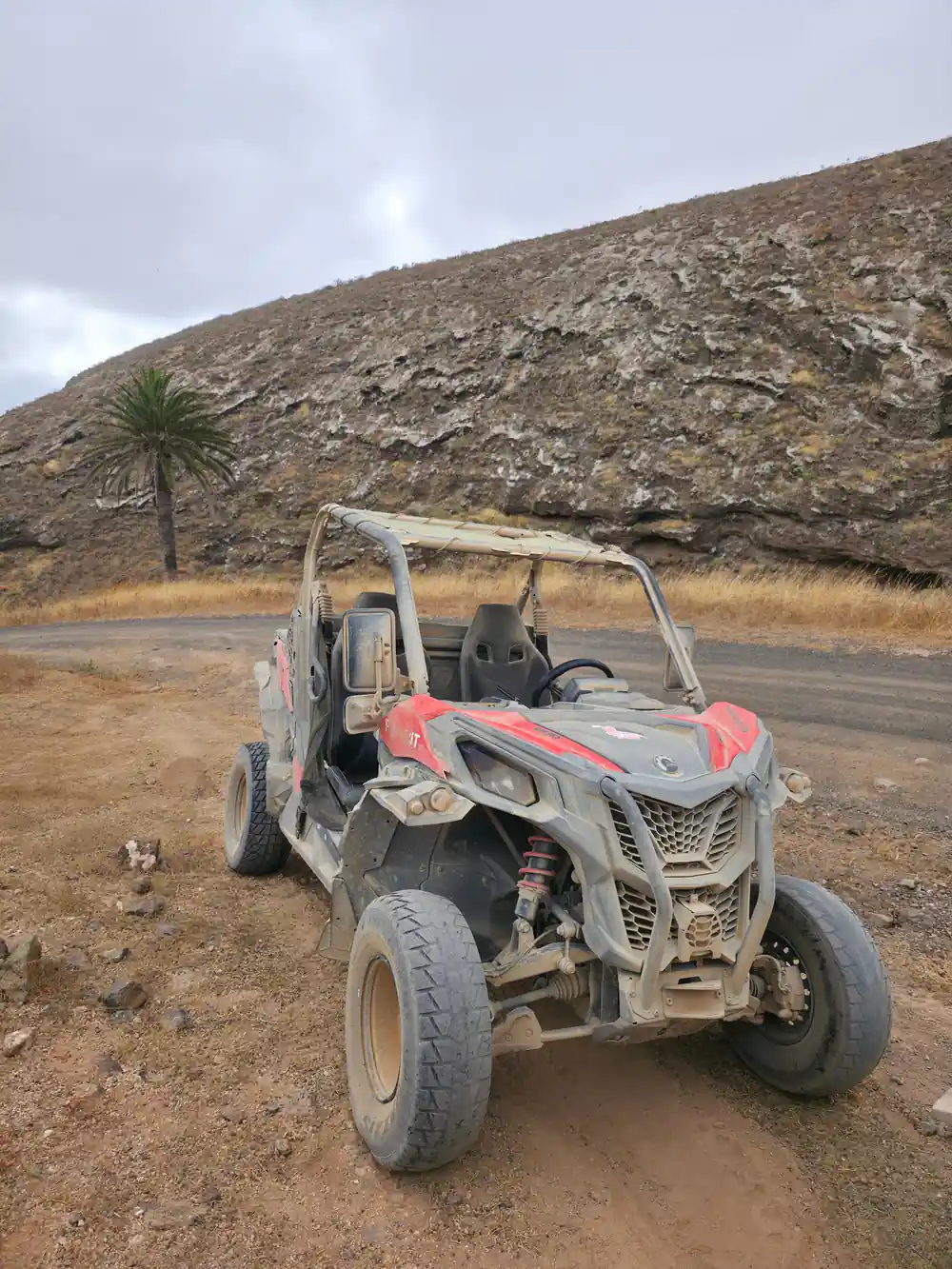
Machines differ from one operator to the next. Lanzarote has open buggies and side-by-side trail machines, including the two-seat Can-Am Maverick X3 DS, whose engine delivers from 135 hp to 200 hp.[14] Your guide runs through the controls and the hand signals before you set off, and you follow in a line on the track.
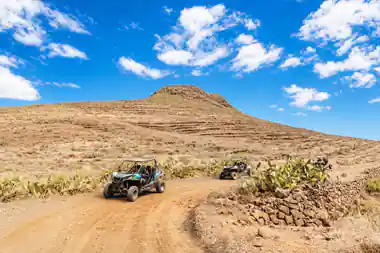
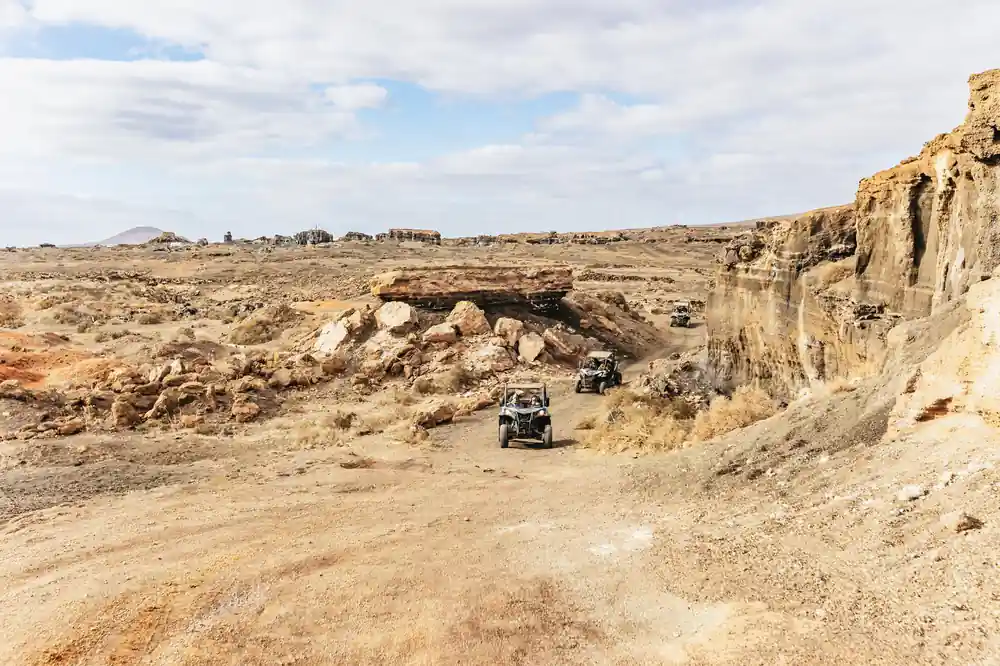
What you see from the seat is the point of the trip: dirt tracks cut through black ash, stone-walled plots, cactus gardens and cones on the skyline. Photographs work well from the passenger side, because the driver usually has both hands full. Dust is guaranteed in dry weather, so keep phones and cameras in something closed.
Planning Your Day Around the Vineyards
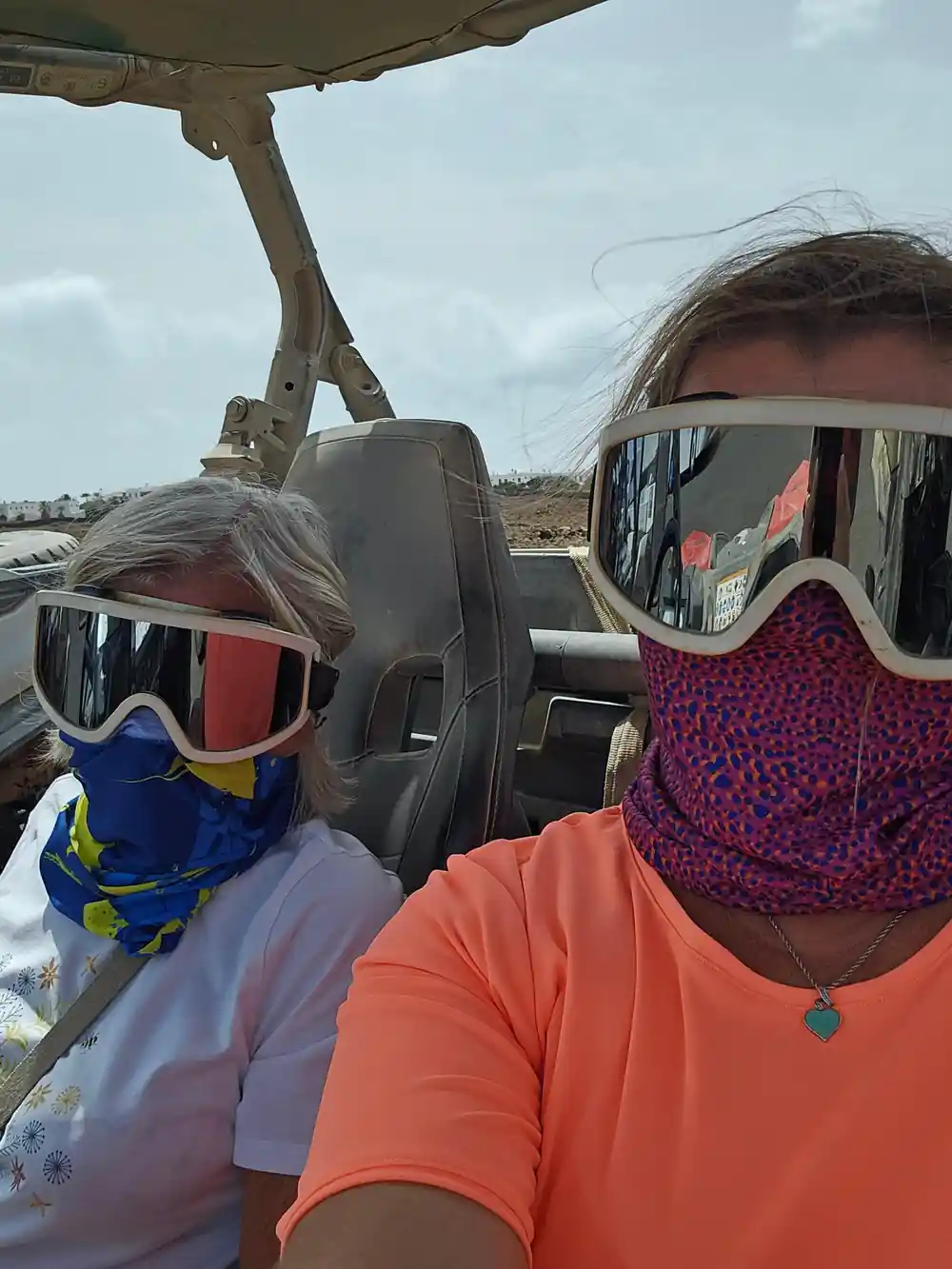
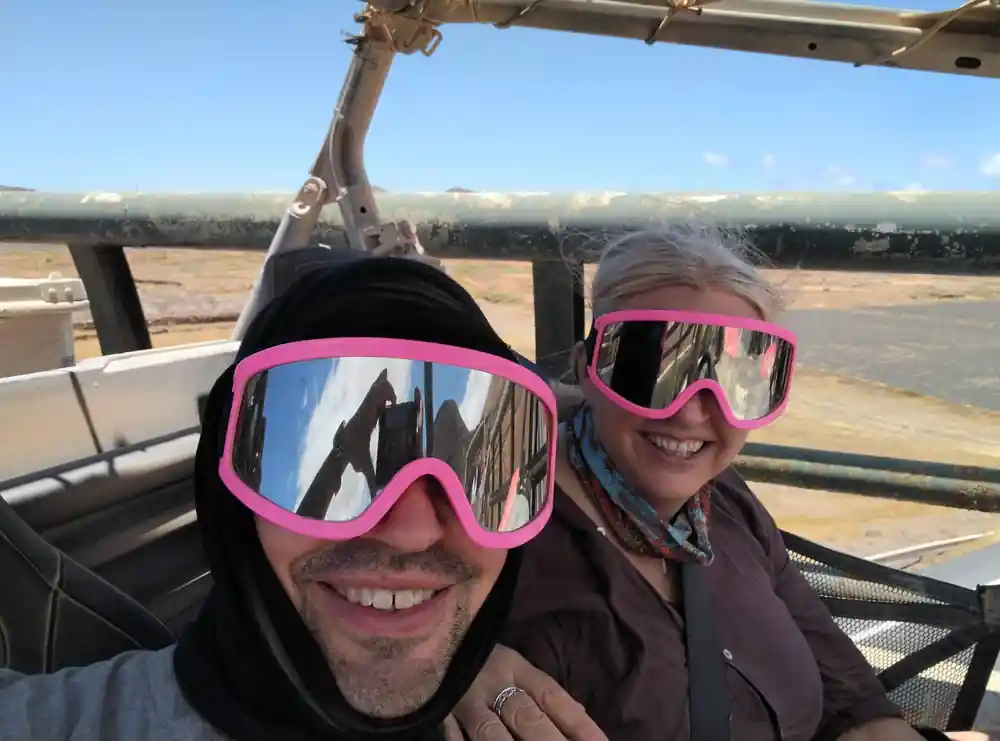
Lanzarote has a warm climate throughout the entire year, with an average annual temperature of about 21ºC.[3] The island sits in the trade winds, where the wind blows steadily from the north-east all year round, though its speed varies.[4] A light jacket, sunglasses and something to cover your face against dust all earn their place in the bag.
Distances are short. The distance between Lanzarote Airport and Puerto del Carmen is 12 km.[15] Playa Blanca is 33 km from Lanzarote Arrecife Airport.[16] Arriving by sea, ships dock at the Puerto de los Mármoles, 3 km (1.9 miles) from the city centre.[17]
Lanzarote receives just over 3 million holiday tourists per year, plus a further 500,000 day visitors arriving by cruise ship.[18] Booking a buggy seat ahead is wise in the busy weeks. The good news for your budget is that Lanzarote currently does not charge a general overnight tourist tax.[9]
Distances that shape a Lanzarote buggy day
Buggy tours in US dollars, from prices
From prices of these GetYourGuide listings:[5],[7],[8].
When to plan a vineyard buggy day
Plan the vineyard buggy day
Pick a slot
The tour has a duration of 2 - 3 hours, so check availability to see starting times and fit it around your day.[5]
Check the driver rules
Drivers need to be 20 or older, with a driving licence held for two years or more.[6]
Sort out pickup
Pickup is available on this tour; check availability for pickup options.[5]
Dress for dust
Off-road tracks throw up fine ash. Sunglasses, a scarf or buff and closed shoes make the ride more comfortable.
Book with free cancellation
Reserve now and pay later, and cancel up to 24 hours in advance for a full refund.[5]
Ride the ash fields and see where Lanzarote wine begins
from US$174Reserve now & pay later