At a glance
- Closed shoes with grip, not flip flops. The floor of a buggy sits low over hot dust and loose gravel, and you want your feet planted when the track turns rough.
- Lanzarote sits in the trade winds, which blow steadily from the north-east all year round, though the speed varies, so a buff, sunglasses and a light long-sleeve layer earn their place.[1]
- The island keeps a warm climate throughout the entire year, with an average annual temperature of about 21ºC, so sunscreen and a hat matter even on a hazy morning.[2]
- Drivers need to be 20 or older, with a driving licence held for two years or more to take the wheel on this operator's buggy tour.[3]
- The guided off-road volcano buggy tour runs 2 - 3 hours, with pickup available, so pack light and leave room in your bag for a dusty top layer.[4]
- Top choice Off-Road Volcano Buggy from US$173 Duration2 - 3 hours[4]Rating4.67 from 5,246 reviews[4]Guide languagesCatalan, English, French, Spanish[4]Free cancellationFree cancellation up to 24 hours[4] Check availability
- Can-Am Trail Buggy from US$196 Duration3 hours[5]Rating4.54 from 243 reviews[5]Guide languagesEnglish, Spanish[5]Free cancellationFree cancellation up to 24 hours[5] See this tour
- On-Road Volcano Buggy from US$207 Duration2.5 hours[6]Rating4.58 from 627 reviews[6]Guide languagesEnglish, Spanish[6]Free cancellationFree cancellation up to 24 hours[6] See this tour
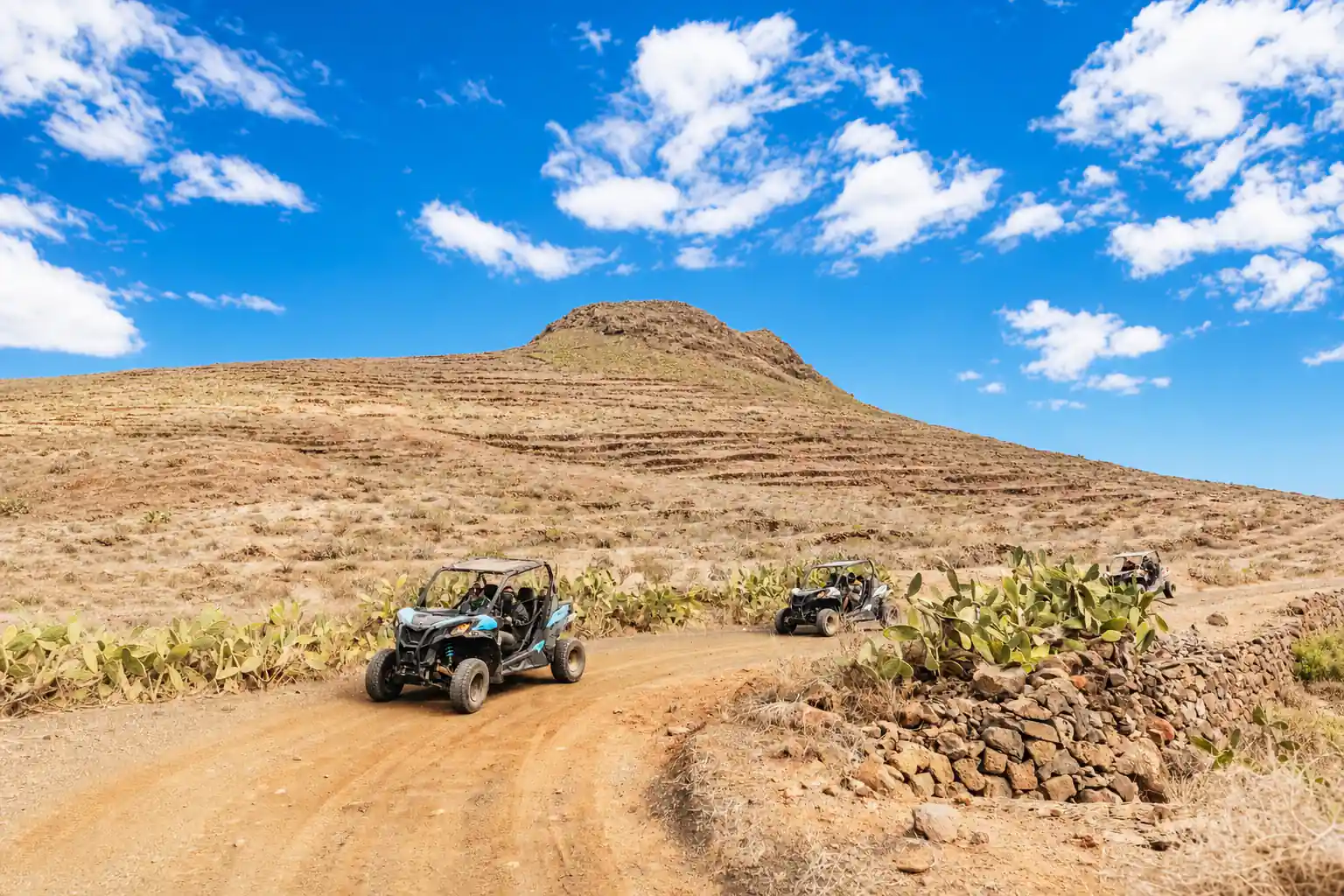
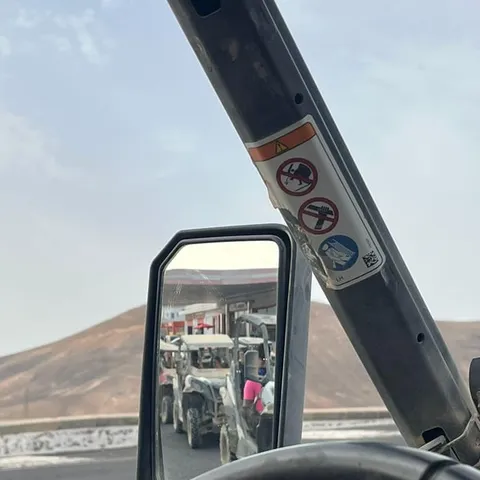
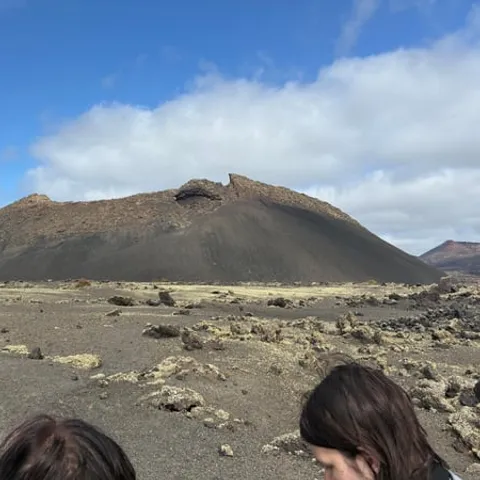
Lanzarote is situated to the the north (above) the equator and we sit directly in the area where the wind is blowing steadily from the north east. This wind blows all year around, although the speed varies from time to time.
Dress for dust, sun and a steady breeze
What to wear
- Closed shoes with grip, not flip flops or slides
- Light layers you can shed on the move or add when the wind picks up
- Sunglasses on a strap, plus a cap you can tighten
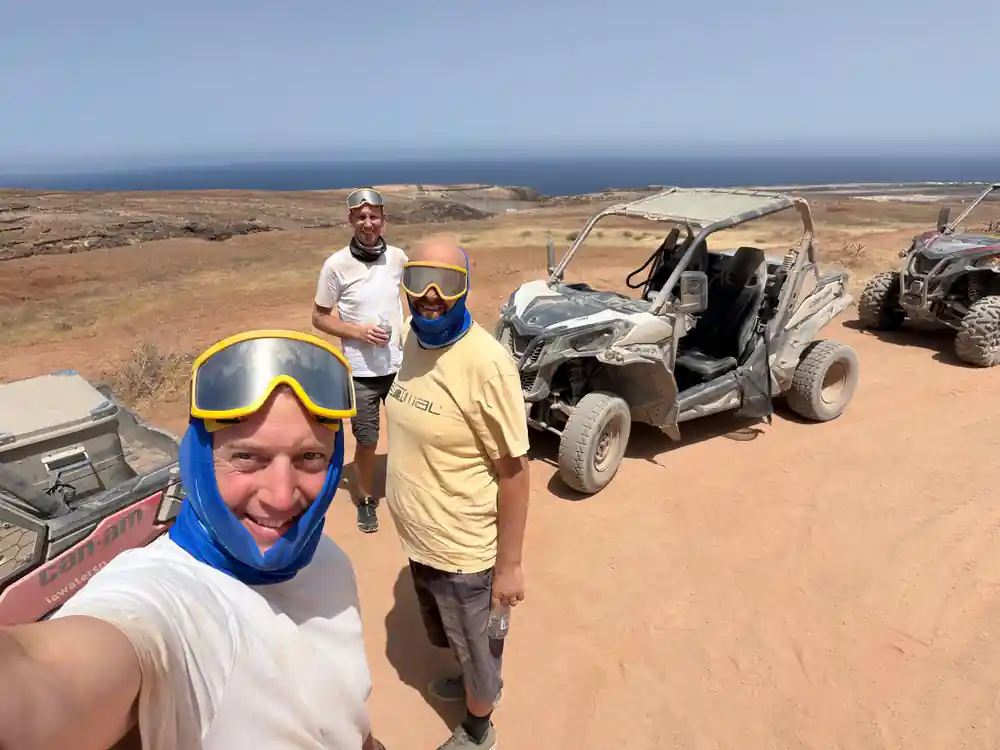
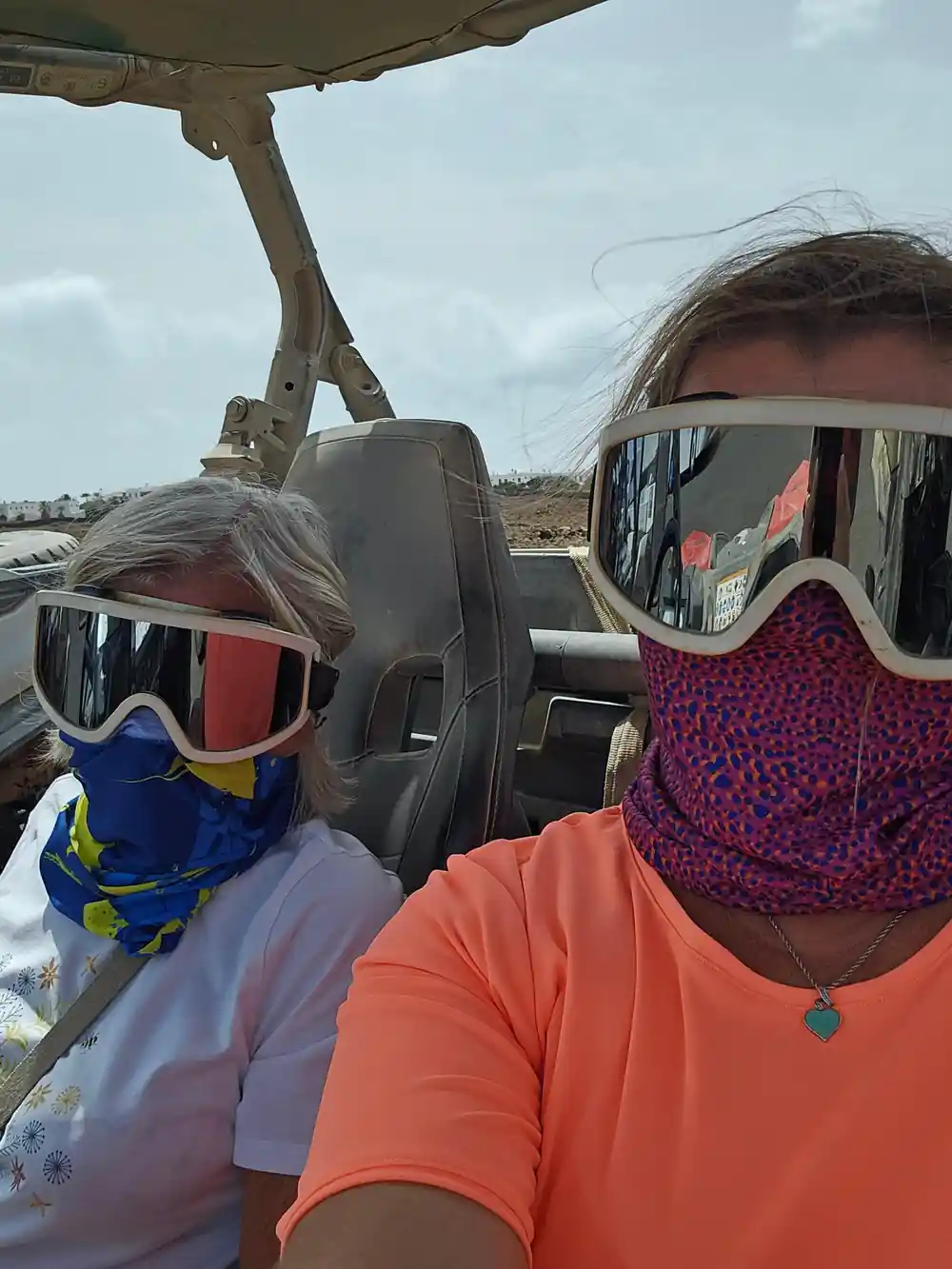
- Buff or thin scarf to cover your nose and mouth in dust
Footwear for off-road buggy terrain
The floor of a buggy sits low, close to hot dust and loose gravel, so your feet take more of a beating than a short ride suggests. Closed shoes with a bit of grip are the simple answer. Trainers with a decent tread, light walking shoes or sturdy canvas boots all work well. Flip flops, slides and thin ballet flats are the wrong call: the ground is uneven where you step out, gravel gets in, and if you work the pedals your foot needs a solid, flat surface under it.
Lanzarote has a warm climate throughout the entire year, with an average annual temperature of about 21ºC[2], so heavy boots are simply not needed. Something breathable that covers the toes is enough. If you plan to drive, keep the sole thin enough to feel the pedals, and think twice about brand-new white shoes if you care about them. The dust on the tracks is fine and pale, and it finds every seam and crease before you get back.
Dust and wind: covering up without overheating
Lanzarote sits in the trade winds, which blow steadily from the north-east all year round, though the speed varies[1]. On a buggy, that breeze is a gift when the sun is high and a nuisance when it lifts fine volcanic dust off the track behind the vehicle in front. A light long-sleeve top and light trousers protect your skin from grit and from the sun at the same time, and they cost you very little in comfort. Tuck the top in so it does not balloon out at speed.
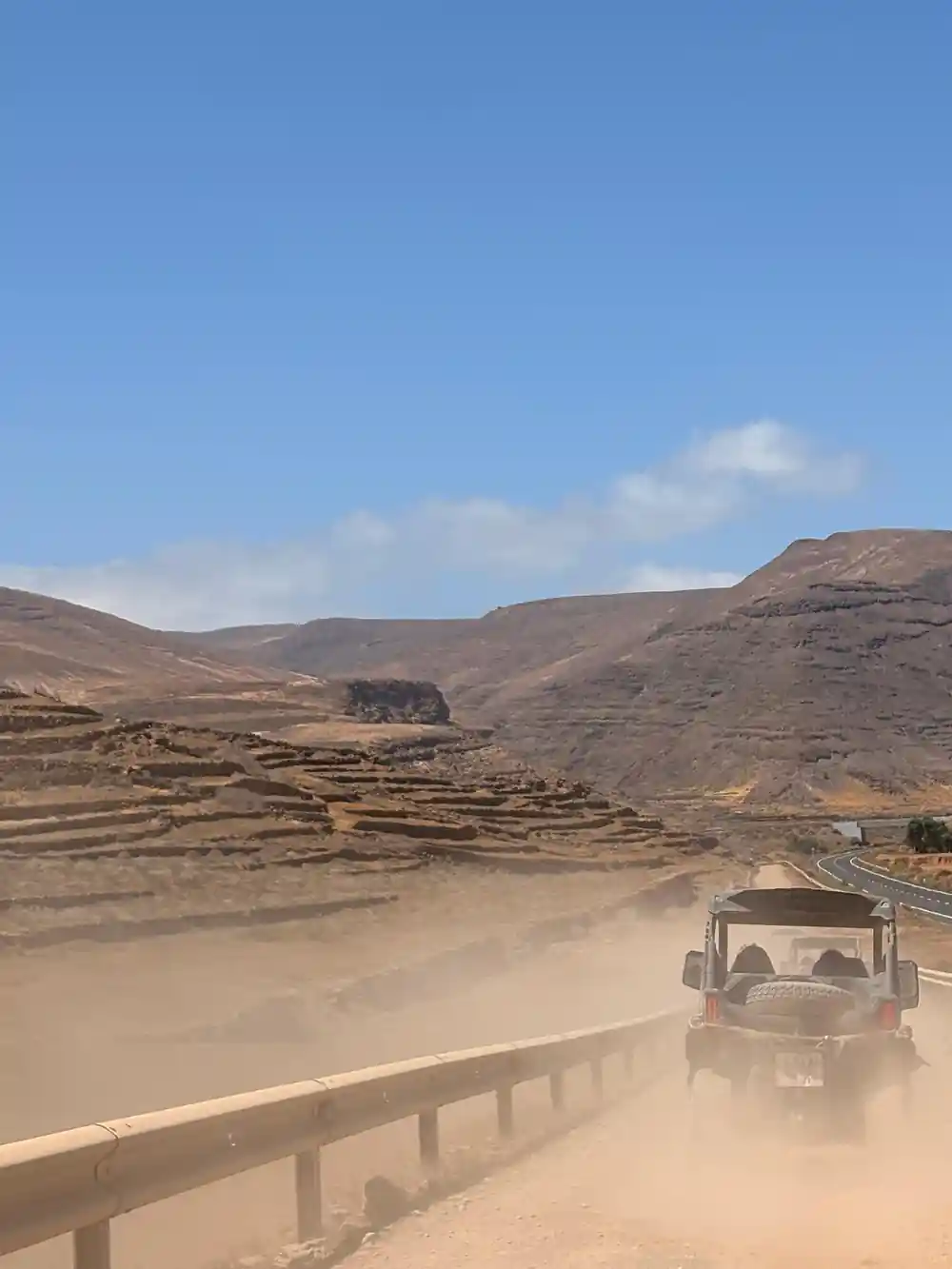
The volcanic ground around Timanfaya is young in geological terms: the eruption there lasted six years and covered 23% of Lanzarote in fresh lava and spatter[7]. That is the material the tracks are made of, loose and dark and easily lifted by a wheel. A thin scarf or buff around the neck is the single most useful thing you can carry. Pull it up over your nose and mouth when the convoy kicks up dust, and drop it when the air clears.
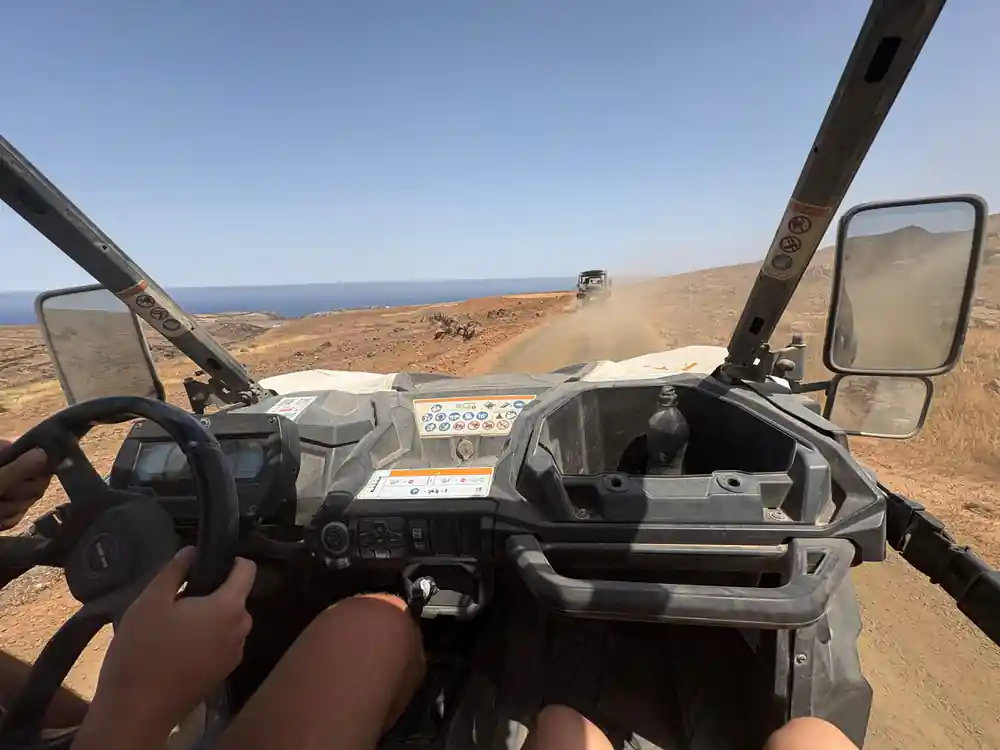
Loose volcanic dust settles on everything, including your shoes
Eyeglasses and contact lens considerations
Wind plus fine grit is hard on eyes, and it is the part of the ride people remember. If you wear contact lenses, expect them to feel dry by the end; a small bottle of saline or rewetting drops in a zipped pocket sorts that out. A spare pair of glasses left in the car or with your pickup driver is cheap insurance. Soft lenses and dusty air are a combination many travellers find uncomfortable, so some simply switch to glasses for the day.
Whatever you wear on your face, put a strap on it. Sunglasses that sit loosely will slide when the buggy bounces, and taking a hand off the wheel or the grab bar to catch them is the last thing you want. Wraparound styles keep more grit out than narrow frames. A microfibre cloth in a sealed bag earns its place too, because a dusty lens wiped with a dry shirt sleeve only makes things worse.
Layering for wind and the island's higher ground
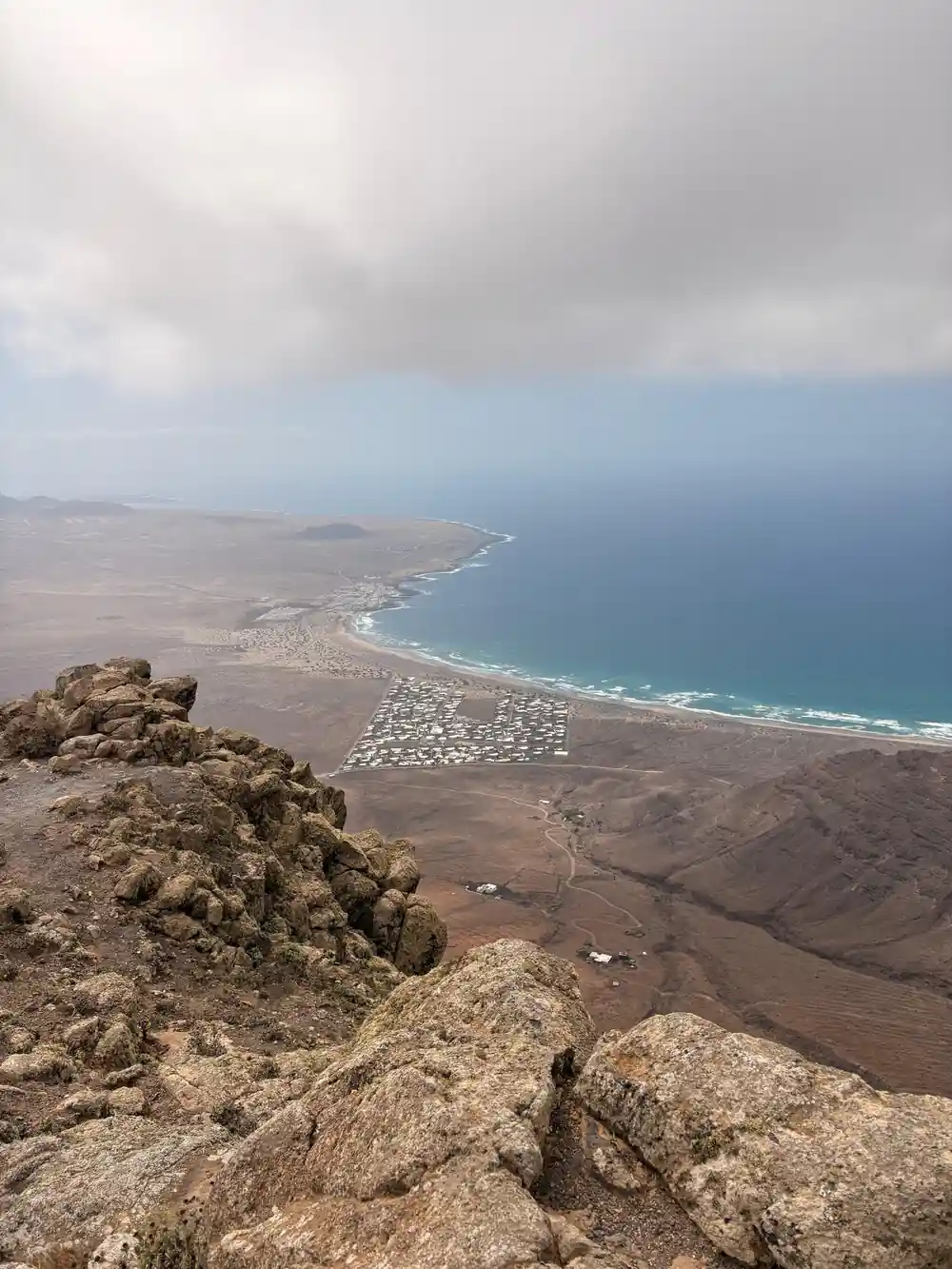
The route and the viewpoints around it climb, and Lanzarote's high ground feels breezier than the resort you left behind. Peñas del Chache, the tallest mountain on the island, stands 672 meters (about 2,205 feet) above the sea[8]. You do not have to go that high to notice the change, but the principle holds: a windproof layer over a light base layer keeps you comfortable on the move and packs away small when you stop.
Think in three thin pieces rather than one thick jacket: a base layer, a light mid layer and a thin windbreaker. The guided ride lasts 2 - 3 hours[4], short enough to travel light and long enough that being over- or underdressed follows you around all morning. Roll the spare layer into a small bag you can tie down rather than leaving it flapping in the open. West of the vines of La Geria, where vines are grown in pits dug in volcanic ash[9], the open country gives the wind a clear run at you.
from US$173
The Guided Off-Road Volcano Buggy Tour starts from US$173, runs 2 - 3 hours and has pickup available, so you can travel light.[4]
Sun exposure and sunscreen under dust conditions
The sun here is strong, and an open vehicle gives it a clear line to your face, arms and neck. Costa Teguise weather UV readings are worth a glance before you pack, and the same advice holds wherever you are staying: high-factor sunscreen, applied before you set off and topped up at every stop. Do not forget the ears, the back of the neck, the tops of your hands and the strip of skin along your parting.
Dust makes sunscreen harder to manage, because you cannot rub grit into your skin. Wipe your face with a clean cloth first, then top up the cream. A cap with a chin cord, or a hat you can tighten, works better than a wide brim that catches the wind. A light long-sleeve top is often easier than repeated sunscreen on your arms. Carry water and sip it, because the steady breeze hides how much you are sweating.
Securing hair and valuables during the ride
Long hair should be tied back, braided or pinned. Loose hair whips across your face at speed and tangles badly once wind and dust get into it. A hair tie or two, plus a cap on top, is usually enough. Leave dangling earrings, long necklaces and anything that can catch on the frame or a strap at the hotel. Rings and a plain bracelet are fine, but if a piece is precious to you, do not bring it.
Empty your pockets before you set off. A phone, keys and cards ride better in a small zipped bag you can secure inside the vehicle than in a loose trouser pocket. Sunglasses go on a strap, a hat on a cord, a scarf tucked in. If you carry a camera, keep it in a sealed pouch and accept that some dust will find it anyway. A spare plastic bag for dusty shoes at the end of the day is a small kindness to your suitcase.
Seasonal weather differences: summer versus winter mornings
Lanzarote keeps a warm climate throughout the entire year, with an average annual temperature of about 21ºC[2], and the trade winds blow from the north-east all year as well[1]. What changes with the seasons is the feel of the day rather than the kit list. Early rides are generally softer and cooler, while late morning and afternoon rides are brighter with more direct sun, and the breeze is a factor at any hour you choose.
If you are checking the UV forecast ahead of a summer visit, remember that the warm season mainly concentrates the sun: longer, brighter days and a sharp edge around midday, so a hat, sleeves and cream all earn their place. In winter the same items still work, with one extra light layer for the morning and the wind. Lanzarote is listed as a Biosphere Reserve under UNESCO's Man and the Biosphere Programme[10], and much of the riding happens out in the open, with no shade to hide in.
From-prices for buggy tours on Lanzarote
Values are from-prices in US dollars taken from these GetYourGuide listings:[4],[5],[6],[11].
Buggy tour from-prices per person
Every amount is a from-price in US dollars from the GetYourGuide listings for these buggy tours:[4],[5],[6],[11].
Times of day and seasons for the ride
Getting ready for the ride
Dress in layers
Start with a light long-sleeve top. Add a thin windproof layer you can take off when the buggy stops and the sun does the work.
Choose closed shoes
Trainers or light walking shoes with tread. Toes stay covered, gravel stays out, and drivers keep a firm, flat feel on the pedals.
Sort eyes and face
Sunglasses on a strap, a buff or scarf around the neck, and a cloth in a sealed bag for dusty lenses at the stops.
Tie hair, empty pockets
Tie hair back, take off dangling jewellery, and move phone, keys and cards into a small zipped bag you can secure on board.
Check the driver rules
Drivers need to be 20 or older, with a driving licence held for two years or more.[3]
Pack water and sunscreen
A bottle of water and high-factor sunscreen cover the two things the wind and dust make easy to forget while you are having fun.
Ready for the lava tracks? Pick your buggy seat and time
from US$174Reserve now & pay later