At a glance
- Lanzarote has a warm climate throughout the entire year, with an average annual temperature of about 21ºC.[1] Light, wind and dust change more than the thermometer does.
- Lanzarote sits in the area of the trade winds, where the wind blows steadily from the north-east all year round, though its speed varies.[2] Pack a light windproof layer.
- The guided off-road volcano buggy tour offers free cancellation up to 24 hours in advance for a full refund, and you can reserve now and pay later.[3]
- Mornings usually bring the cleanest air and the longest shadows on the lava. The tour runs 2 to 3 hours, leaving the rest of the day free.[3]
- To drive, you must be at least 20 years old and have held a valid driving licence for a minimum of two years.[4] Sort that out before you pick a date.
- Top choice Guided Off-Road Buggy Tour from US$173 StyleOff-road volcano route[3]Duration2 to 3 hours[3]Rating4.67 from 5,246 reviews[3]PickupAvailable, check for options[3]CancellationFree cancellation 24 hours ahead[3] Check availability
- On-Road Guided Buggy Tour from US$207 StyleOn-road volcano route[5]Duration2.5 hours[5]Rating4.58 from 627 reviews[5]PickupAvailable, check for options[5]CancellationFree cancellation 24 hours ahead[5] See this tour
- 4 or 6 Seater Buggy Tour from US$230 StyleOff-road volcano route[6]Duration2 to 3 hours[6]Rating4.48 from 644 reviews[6]PickupAvailable, check for options[6]CancellationFree cancellation 24 hours ahead[6] See this tour
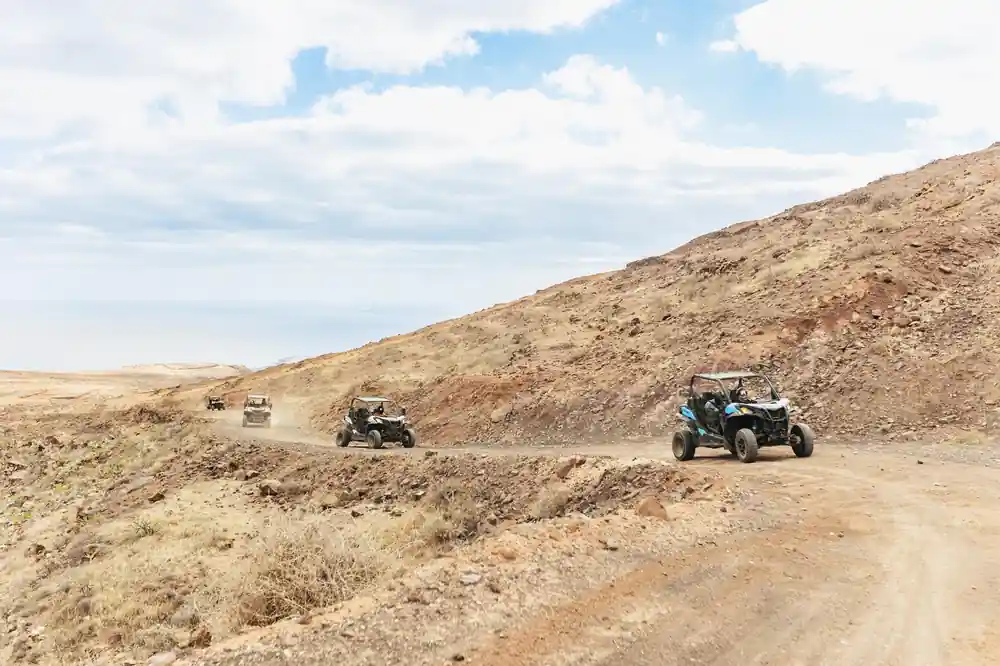
Thanks to its geographical situation, Lanzarote possesses a warm climate throughout the entire year, with an average annual temperature of about 21ºC .
When to ride: our verdict
What to wear and pack
- Sunglasses that stay put and a cap that ties under your chin
- A light windproof layer for the high open ground
- Sun cream and lip balm, since the pale ground throws light back at you
- Closed shoes you can dust off, plus a buff or scarf for the dust
Read before booking
- Drivers must meet the age and licence rules, so check before you reserve
- Choose a start time that leaves you an unhurried run to the meeting point
- Look at the start times offered for your own travel dates
- A booking you can move is worth more than a perfect forecast
Winter riding in an open buggy
Winter is the season most travellers ask about, and it is also the least dramatic. Lanzarote has a warm climate throughout the entire year, with an average annual temperature of about 21ºC, so a ride in the cooler months rarely calls for more than a t-shirt and a light layer on top.[1] What does change is the light: the winter sun stays low, shadows stretch long across the lava, and the black rock can read almost blue in the middle of the day. Afternoon slots feel warmer than morning ones, and the low sun makes bare ash look soft rather than scorched.
Wind matters more than temperature here. Lanzarote sits in the area of the trade winds, where the wind blows steadily from the north-east all year round, though its speed varies, and in an open buggy you feel every exposed stretch of that breeze.[2] Pack a thin windproof layer you can zip up on the high ground and pull off again on the coast, because layers beat one heavy jacket where the mercury hardly moves. Dust finds its way into everything, so sunglasses, a buff and a collar are worth more than you might guess, and a spare pair of socks in the bag never hurts.
Riding at Christmas and New Year
The island receives just over 3 million holiday tourists per year, plus a further 500,000 day visitors arriving by cruise ship.[7] If your Christmas or New Year dates are fixed, sort the ride out early and build the rest of the day around it: a late breakfast, a mid-morning buggy slot, then a long lunch by the water. The light at that time of year is low and warm, which flatters photographs of the lava and keeps an open cab comfortable, though the evenings arrive early and the morning is the brighter half of the day.
One piece of holiday budgeting is refreshingly simple: Lanzarote currently does not charge a general overnight tourist tax.[8] The guided off-road volcano buggy tour also comes with free cancellation up to 24 hours in advance for a full refund, and you can reserve now and pay later.[3] In practice that means plans can move without the booking becoming a problem. Choose a start time that leaves room for a slow breakfast, and keep the rest of the day loose.
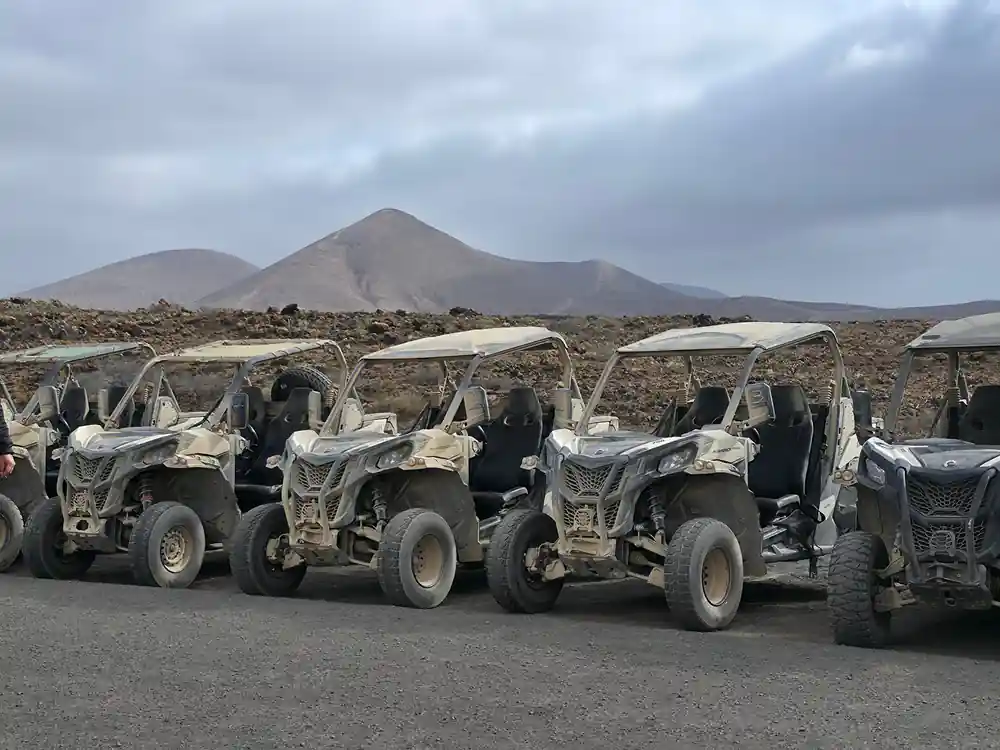
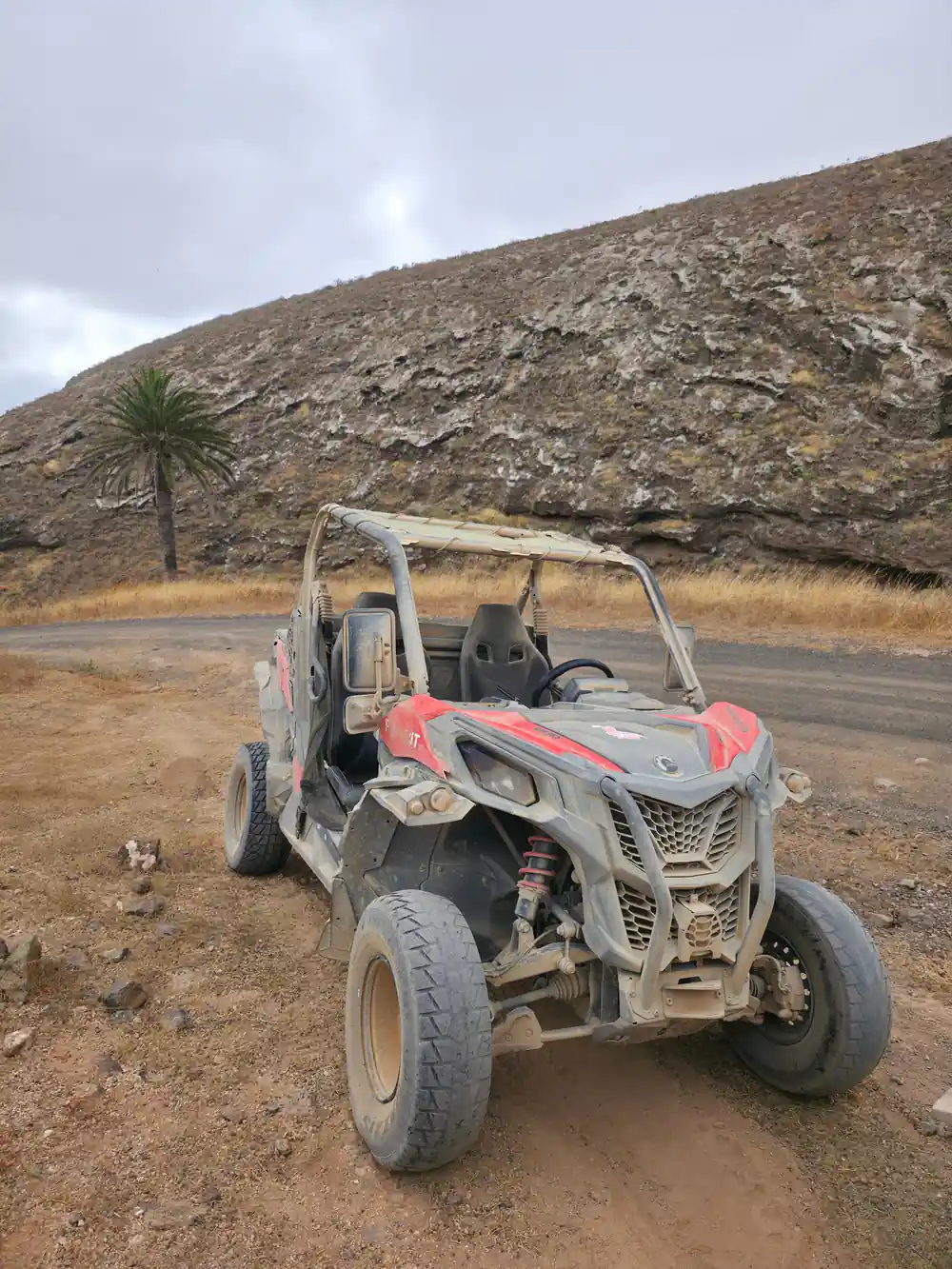
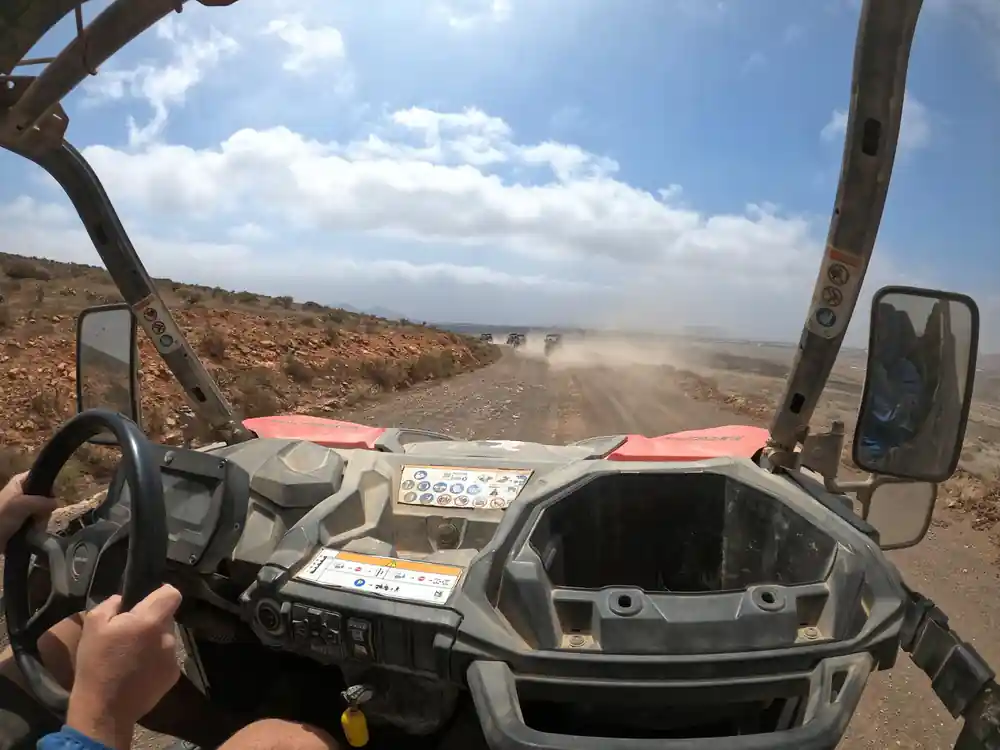
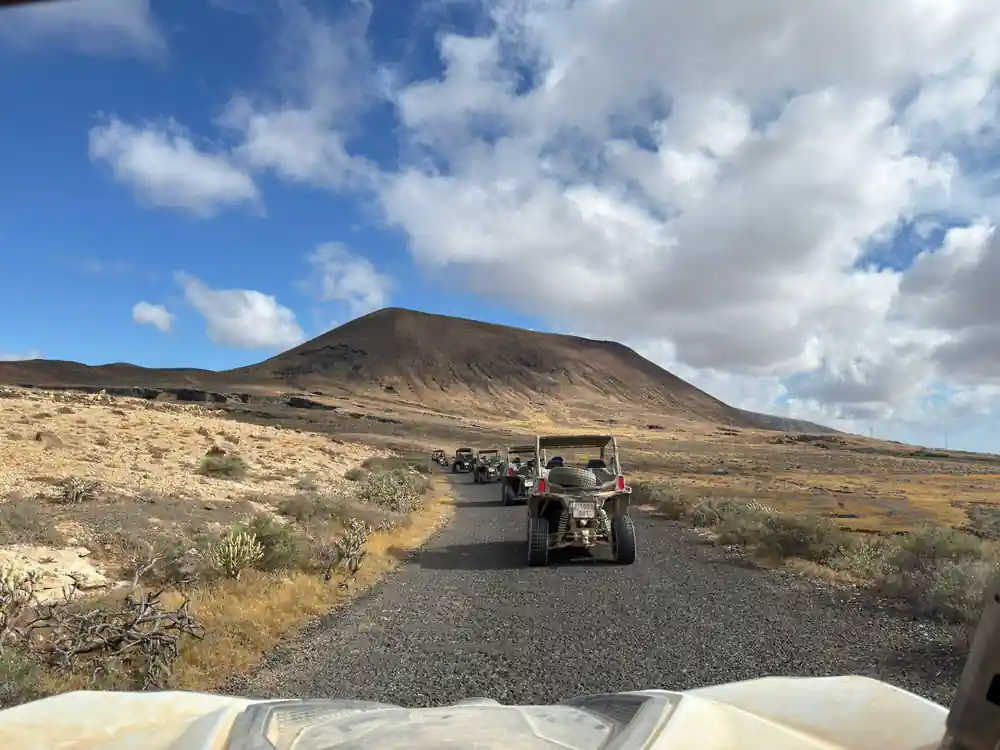
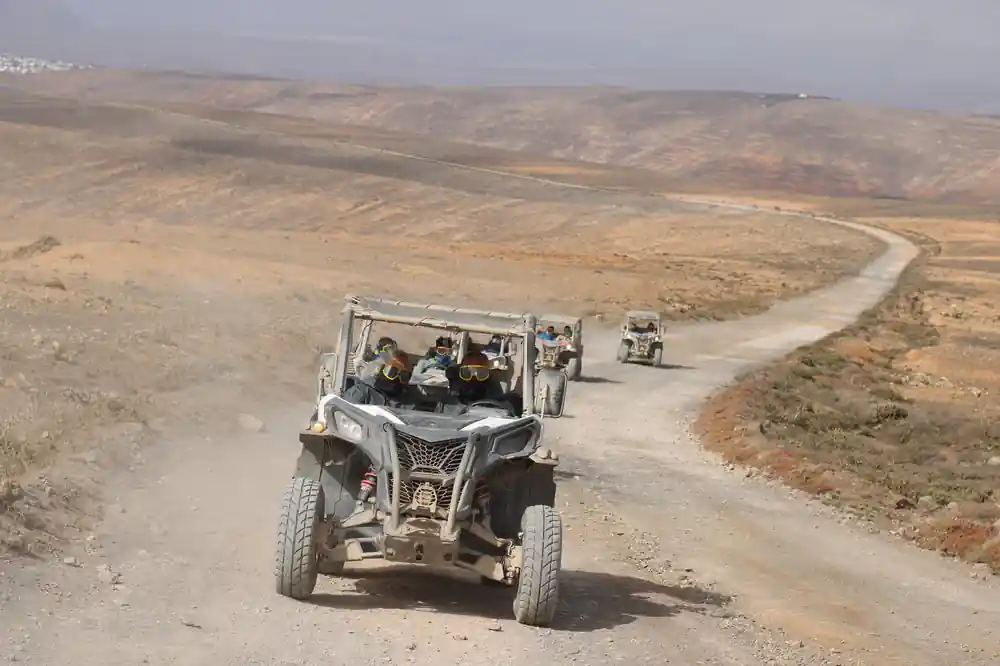
Buggy tracks cut across bare volcanic ash under a wide Lanzarote sky.
Summer heat and midday conditions off-road
Summer riding is about light and dust as much as heat. Lanzarote has a warm climate throughout the entire year, with an average annual temperature of about 21ºC, and the long days mean an early ride still leaves a full afternoon free.[1] The ground you cross is young and bare: the Timanfaya eruption lasted six years and covered 23% of Lanzarote in fresh lava and spatter.[9] Loose dark rock, fine ash and a huge open sky are what the route is made of, and the sun is high enough around midday to flatten the landscape into a bright, shadowless glare.
The trade wind is summer's saving grace. Lanzarote sits in the area of the trade winds, where the wind blows steadily from the north-east all year round, though its speed varies, and on open ground it keeps air moving through the cab.[2] Drink more than you think you need, wear long sleeves, tie your hat under your chin, and keep a buff handy for the dust a buggy throws up. Goggles or sunglasses that stay put are worth more than any other piece of kit on a bright, dusty afternoon, and a sealed bag for a phone saves a lot of wiping.
Autumn conditions and stable weather
Autumn riding usually feels gentle. Lanzarote has a warm climate throughout the entire year, with an average annual temperature of about 21ºC, so the slide out of summer is gradual rather than sharp.[1] Mornings are soft, the light turns golden earlier in the evening, and the tracks are quieter once the school holidays are over. It is a good season for a first buggy drive, with warm ground, clear skies and enough daylight to fit a ride around lunch, and the shoulder weeks make it easier to find a start time that suits you.
Much of the drama on a buggy route comes from the south-west coast and the vineyards inland. Los Hervideros is a stretch of dramatic black lava cliffs on the wild south-west coast, where the Atlantic surges into a labyrinth of sea caves and blowholes and appears to boil among the rocks.[10] Near Yaiza, the crater of an extinct volcano submerges into the Atlantic to form the Charco de los Clicos, the Green Lagoon, which is a Natural Reserve.[11] Inland, La Geria grows its vines in pits dug in volcanic ash, a centuries-old technique that takes advantage of the exceptional properties of volcanic ash.[12] Keep a camera within reach and a cloth over the lens between stops.
from US$173
An open buggy, a small group and a guide who knows every track across the ash: this is the ride that shows you the raw side of the island.
Calima dust haze and visibility
Calima is the local word for the dust haze that occasionally drifts in from the Sahara, turning the sky a milky orange and flattening the horizon into a smear. It is not a fixture of the Lanzarote year, and when it arrives it rarely stays long, but it does change what a ride looks like while it lasts. Lanzarote sits in the area of the trade winds, where the wind blows steadily from the north-east all year round, though its speed varies.[2] A steady breeze rather than a still, hazy sky is the island's usual pattern.
For a buggy tour, haze matters in two practical ways. The panorama shrinks, so ridge-top views lose their edges and the lava stops looking black and starts looking grey, and fine dust settles on goggles, lenses and phone screens within minutes. If the air is thick on your date, move to a later start time if you can, keep lenses in a case between stops, and dial the pace back instead of chasing a view that is not there. Hazy light is soft light, and a buggy on a dusty plain can look extraordinary in it.
Wind exposure at the summit ridge
Height changes everything about wind. The highest ground on Lanzarote, Peñas del Chache, stands 672 meters (about 2,205 feet) above the sea, and whatever the forecast says for the resort, the open uplands are a different world.[13] Lanzarote sits in the area of the trade winds, where the wind blows steadily from the north-east all year round, though its speed varies, so a steady breeze is the island's normal state rather than an exception.[2] In an open buggy on a ridge, that steady breeze becomes a steady rush of air across your face and shoulders.
A ride can feel cool and breezy on high open ground even when the coast is calm, and dust lifts easily where the wind crosses bare ash. A neck buff, snug sunglasses and a jacket with a collar make more difference than an extra jumper, and a spare hair tie is a small mercy on a windy ridge. Lanzarote is listed as a Biosphere Reserve under UNESCO's Man and the Biosphere Programme, comprising the northernmost island of the Canary Archipelago and the northern islets.[14] Staying on the tracks your guide sets is part of riding through a protected landscape.
Morning light versus afternoon timing
Start times shape the day more than most people expect. The guided off-road volcano buggy tour runs 2 to 3 hours, with starting times to check when you book, and it keeps groups to a maximum of 10 participants with guides speaking Catalan, English, French and Spanish.[3] Mornings tend to bring the cleanest air and the softest light across the lava, while later slots give warmer rock underfoot and longer shadows as the sun drops. Either works well, as long as you leave yourself time to arrive unhurried.
Getting to the meeting point is the other half of the decision. Lanzarote Airport sits 12 km from Puerto del Carmen, while the run to Playa Blanca is 33 km.[15][16] Cruise passengers dock at the Puerto de los Mármoles, 3 km (1.9 miles) from the city centre.[17] Add those transfers to your start time and pick a slot that gives you a margin rather than a sprint. A short drive on a map can grow on a holiday morning, especially with a hire car, an unfamiliar roundabout and a passenger reading the directions.
Traveller ratings for Lanzarote buggy tours
Every bar shows the traveller score given on the GetYourGuide listing for that buggy tour.[3][5][6][18]
Buggy tour prices compared
From prices per person, as listed for each tour on GetYourGuide.[3][5][6][18]
When to book your ride
Plan your buggy ride
Check the wind, not just the sun
An open buggy puts you straight into the breeze, so look at the wind along with the sky before you fix a date.
Pick a start time that suits you
The tour runs 2 to 3 hours, with starting times to check when you book.[3]
Dress for dust and wind
Long sleeves, snug sunglasses and a buff work better than a heavy coat in this landscape.
Sort the driver paperwork
Drivers need to be 20 or older, with a driving licence held for two years or more.[4]
Leave slack in the day
Free cancellation up to 24 hours in advance for a full refund gives you room to move if plans shift.[3]
Ride the lava when the light and the wind suit you
from US$174Reserve now & pay later