At a glance
- Free cancellation up to 24 hours in advance for a full refund on the guided off-road volcano buggy tour.[1]
- Self-drive tours put the vehicle in your hands, so ask about the damage excess and any card hold before you book, and photograph the buggy at handover.
- To drive on the Buggy Tour Lanzarote tour you must be at least 20 years old and have held a valid driving licence for a minimum of two years.[2]
- The guided off-road volcano buggy tour runs 2 - 3 hours and is limited to 10 participants.[1]
- Reserve now and pay later, and pickup is available on this tour; check availability for pickup options.[1]
- Top choice Off-Road Volcano Buggy from US$173 Duration2 - 3 hours[1]RatedRated 4.67[1]LanguagesCatalan, English, French, Spanish[1]BookingReserve now & pay later[1]CancellationFree cancellation up to 24 hours[1] Check availability
- Can-Am Trail Buggy from US$196 Duration3 hours[3]RatedRated 4.54[3]LanguagesEnglish, Spanish[3]BookingReserve now & pay later[3]CancellationFree cancellation up to 24 hours[3] See this tour
- On-Road Volcano Buggy from US$207 Duration2.5 hours[4]RatedRated 4.58[4]LanguagesEnglish, Spanish[4]BookingReserve now & pay later[4]CancellationFree cancellation up to 24 hours[4] See this tour
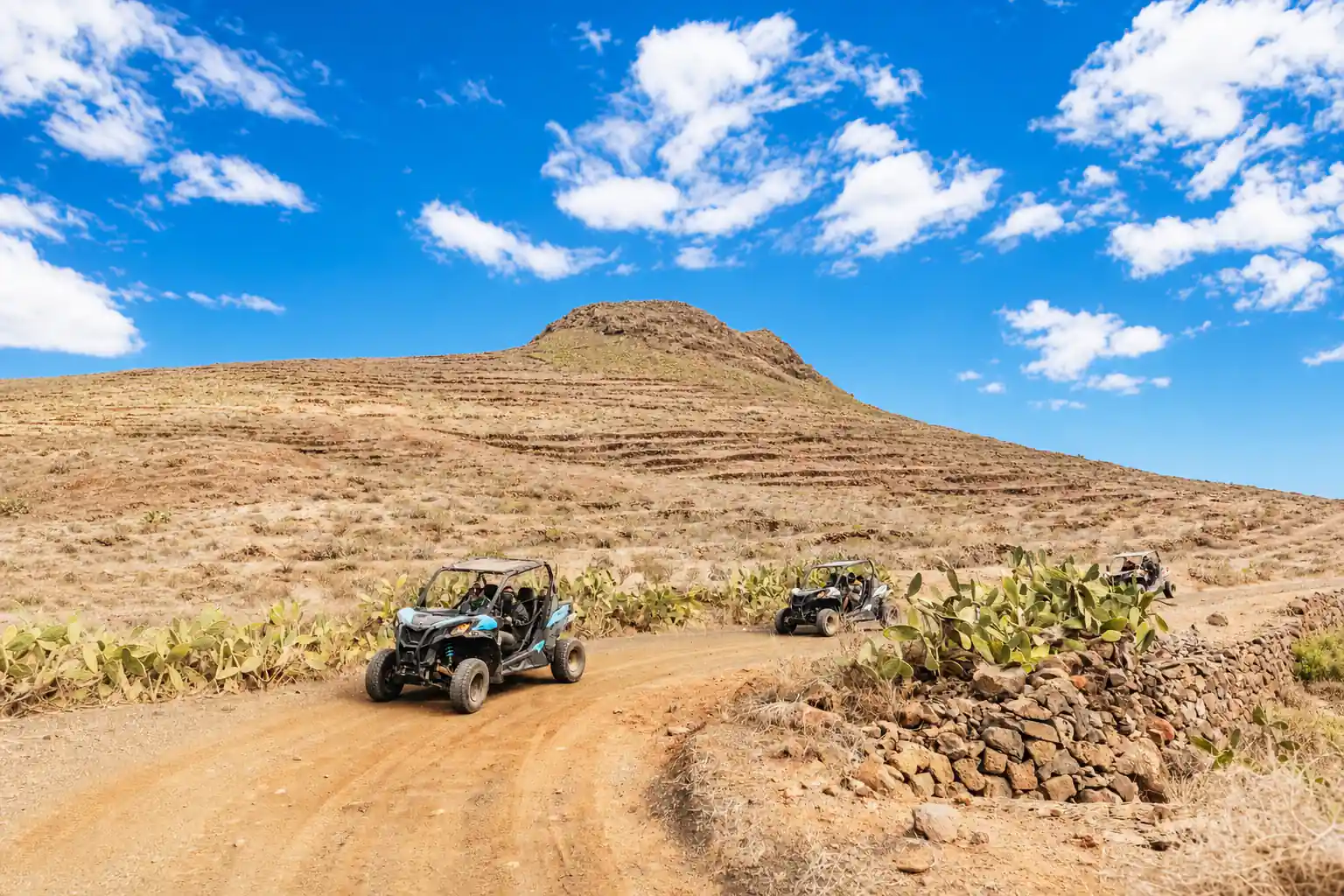
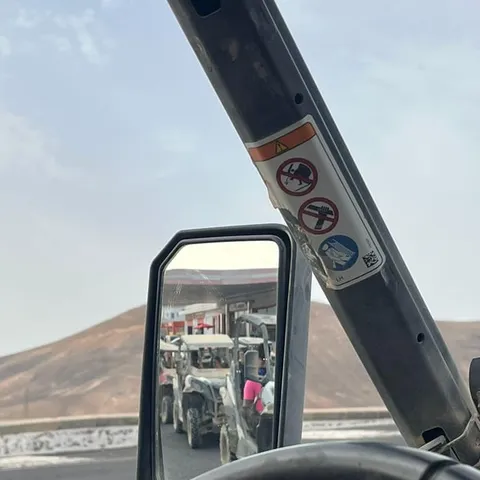
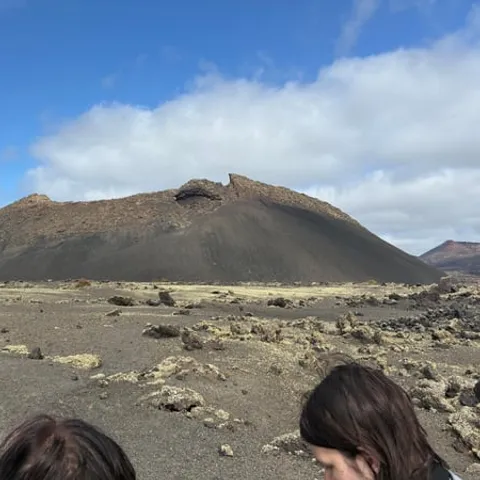
The Lanzarote Biosphere Reserve comprises the northernmost island of the Canary Archipelago, including the northern islets.
Our verdict: a buggy tour with a proper safety net
Read before booking
On the day
- If you are given a helmet and goggles, wear them for the whole drive
- Sun cream, water and a dust scarf for the lava fields
- Layers for the wind; the island averages about 21ºC across the year[5]
- Tell the guide if you feel unwell or want to swap seats
Damage liability and excess charges
Buggy tours are self-drive, which means you take the wheel of someone else's vehicle across rough volcanic ground, and the paperwork you sign reflects that. Before you book, ask the operator what happens if the machine comes back marked: is there a damage excess, is a deposit or card pre-authorisation taken at the desk, does the excess drop if you add the operator's own cover, and is that cover priced per vehicle or per driver. Ask in writing, in a language you read comfortably, and keep the reply with your booking confirmation.
Your own travel insurance, your car policy or a credit card may include rental vehicle cover, so it is worth reading the exclusions and ringing the insurer with one direct question: is a guided buggy tour on unsealed volcanic tracks covered? At handover, photograph the vehicle from every side and the dashboard, mark any existing scrapes on the sheet and keep a copy on your phone. A handful of photographs at handover is the cheapest safety net of the holiday.
If something does get damaged on the drive, say so at the first stop rather than hoping it goes unnoticed. A cracked panel or a scuffed bumper is a small, cheap conversation at the end of the tour and a much bigger one if the guide only finds it after you have gone. Take your own photographs of the damage, note the time, and ask for a short written note of what was agreed, because that note and your handover pictures are what any later claim will rest on.
What happens if your buggy breaks down
These are tough machines on unforgiving ground. The Timanfaya eruption lasted six years and covered 23% of Lanzarote in fresh lava and spatter.[6] The tracks that cross it are loose, sharp and pitted in places, so a puncture or a stone through a hose is unusual but not dramatic. Guided tours run as a convoy with the guide in front or behind, so the group stops, the guide looks at the vehicle, and you either carry on after a quick fix or move across to another machine.
Your part is simple. Pull over where the guide asks and where the track allows, keep your seatbelt fastened while you wait, and leave the repairs to the people who know the vehicle. Do not walk off across the lava to find help, and do not try to free a stuck buggy on your own. The group is limited to 10 participants, so the guide can keep an eye on everyone at once, and the outing is listed at 2 - 3 hours.[1]
Ask a couple of questions when you book: what happens if a vehicle stops, and how long the whole outing usually takes. If you have something booked afterwards, leave some slack in the day, because dust, track conditions and the pace of the group vary from one run to the next. And if you like to know the machine underneath you, ask which buggy you will be driving before you arrive.
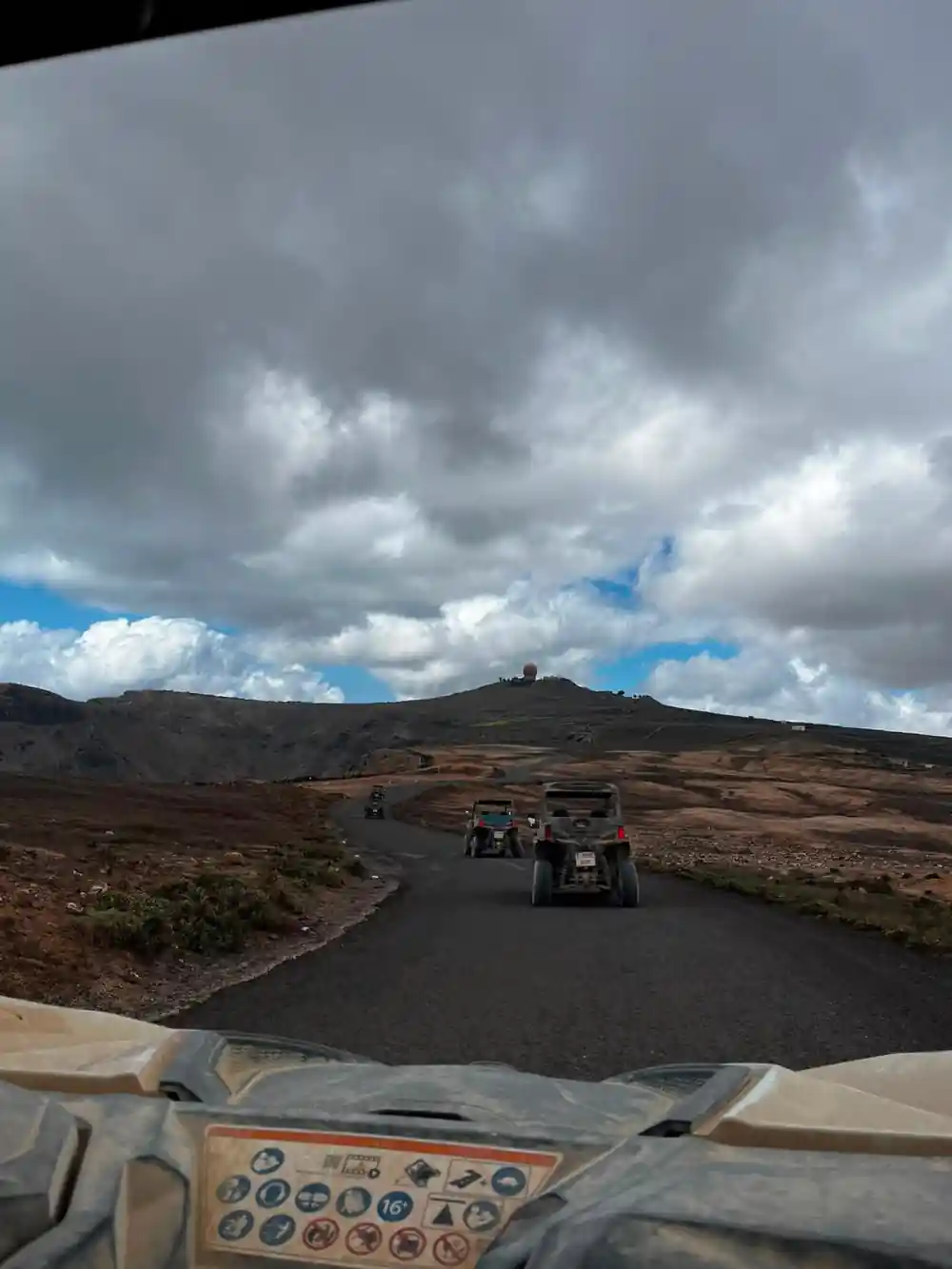
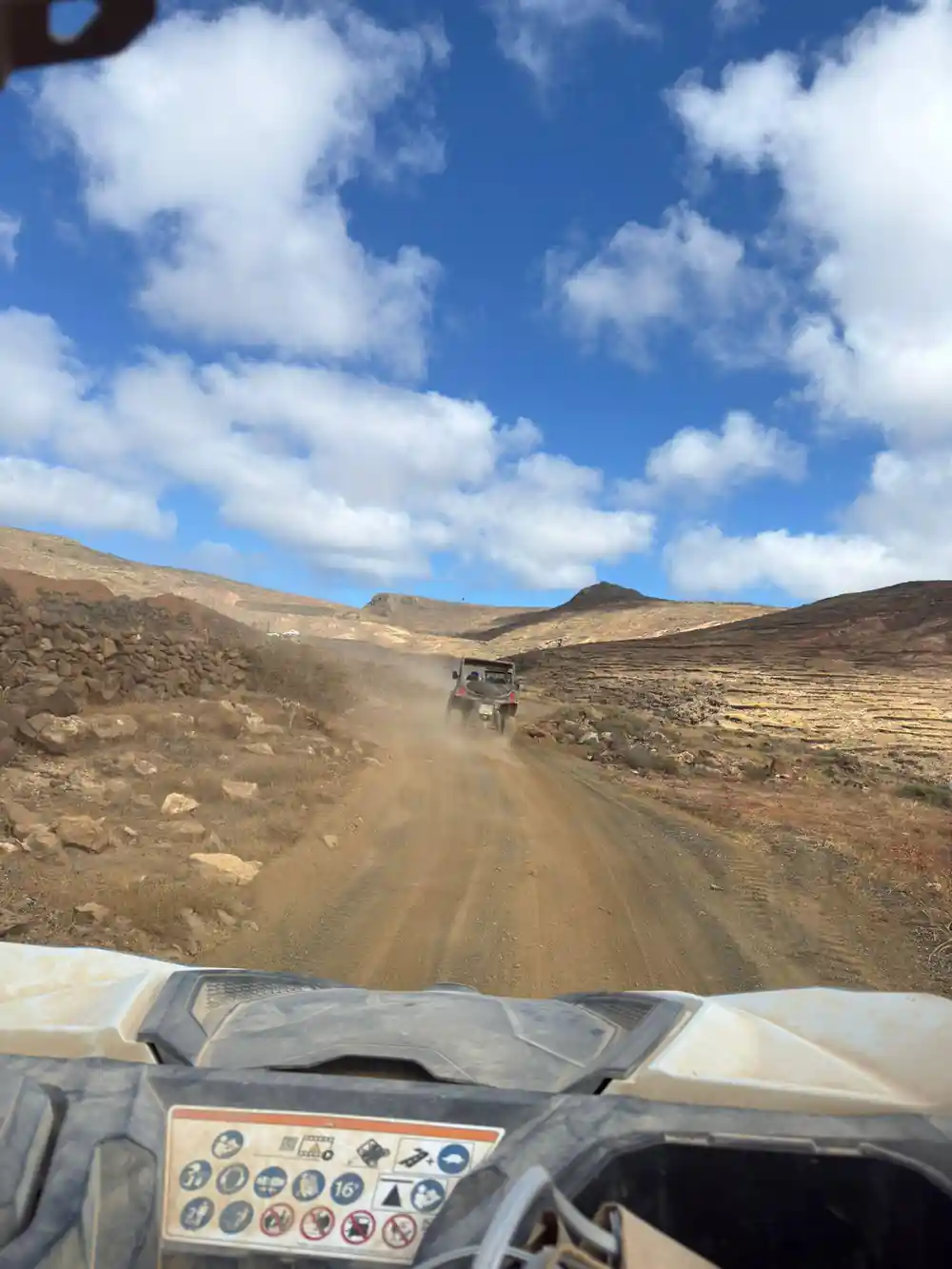
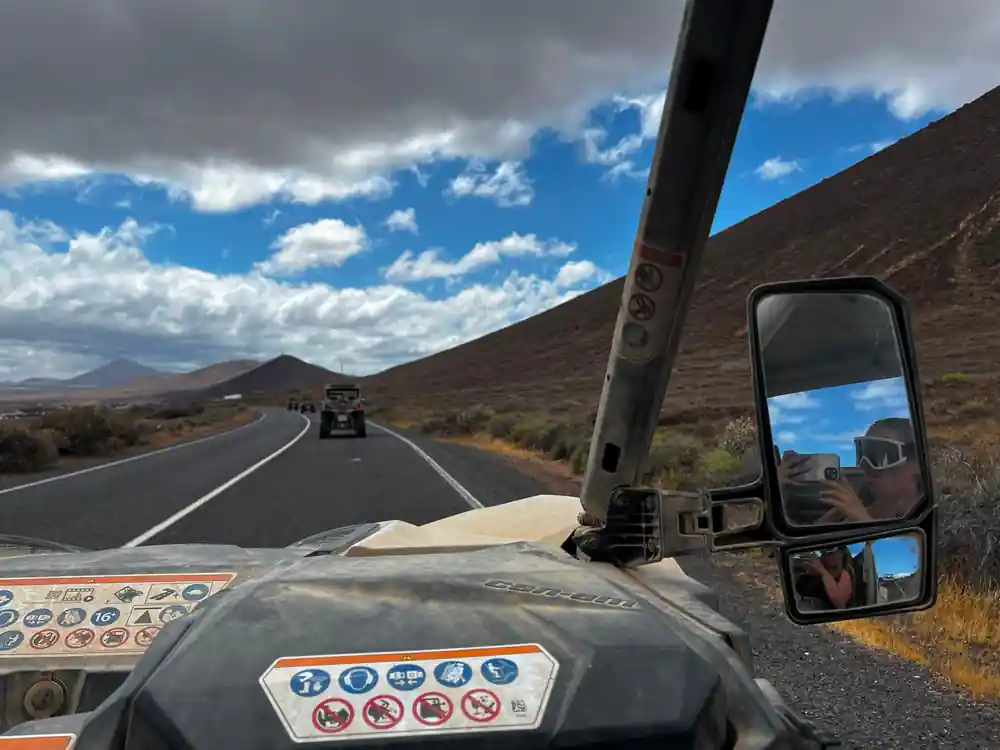
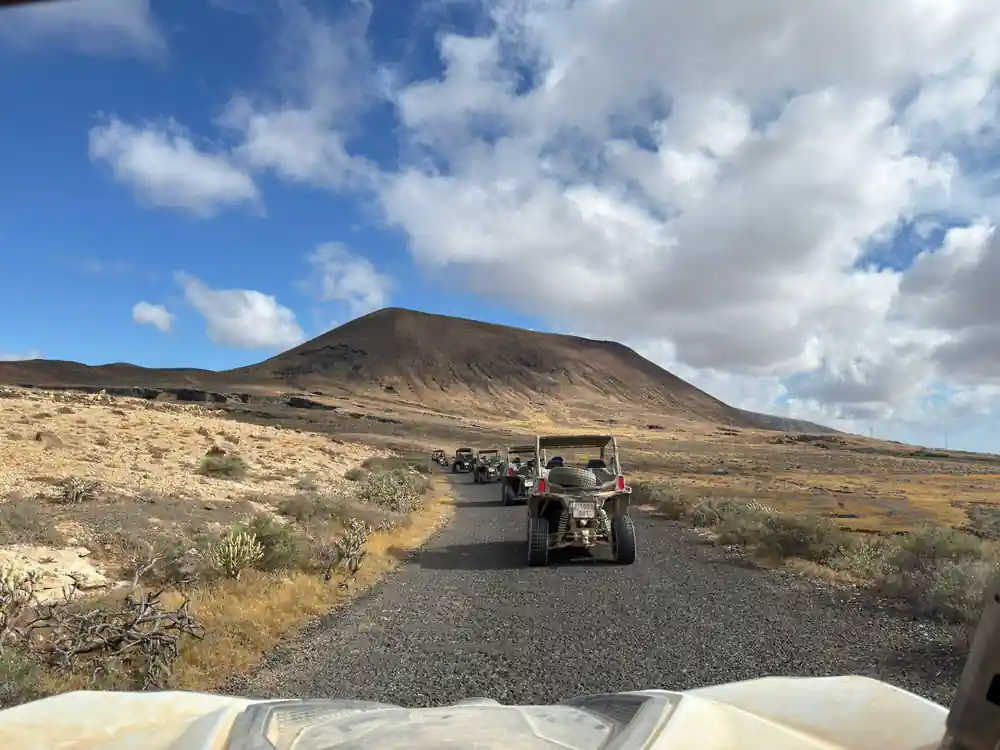
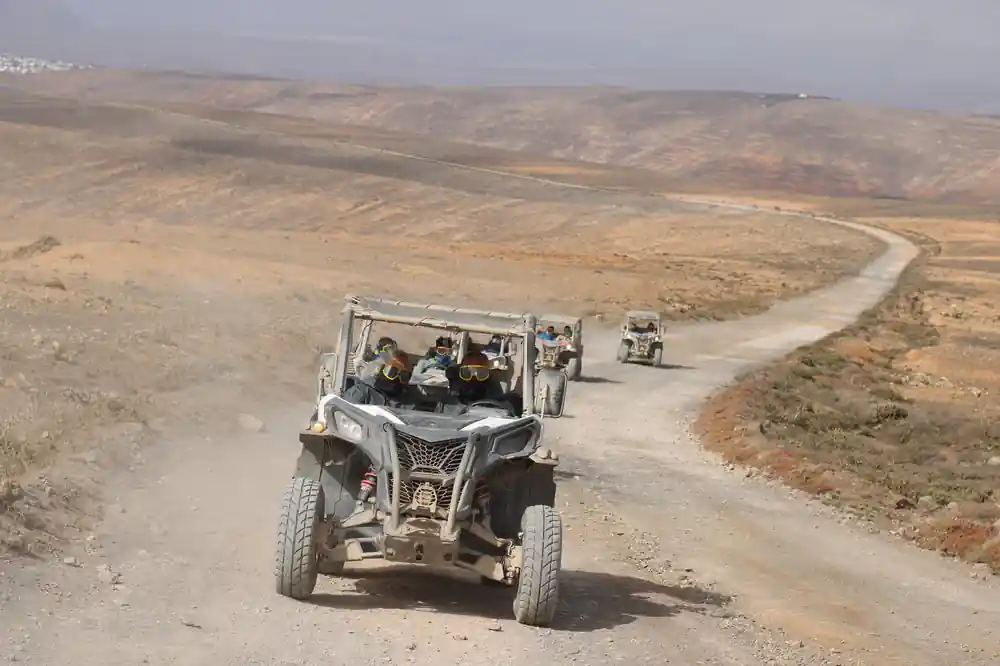
Buggy convoy raising dust on the volcanic tracks above the coast
Guide's first aid and radio equipment
Your guide is the person who holds the day together. This tour runs with a live guide, and the languages listed are Catalan, English, French and Spanish, so you can raise a problem in the language you are most comfortable with.[1] Before you set off, it is worth asking what the convoy carries: a first aid kit, drinking water, and a radio or phone link between the guide and base. That is also the moment to mention anything the guide should know about you.
Tell the guide about anything that matters before the wheels turn, from asthma and allergies to a bad back, and carry your own medication in a pocket rather than in a bag left behind. Heat, dust and the vibration of an open vehicle take more out of you than a normal drive, so speak up early if you feel dizzy, sick or simply done with the track. A guide would far rather stop for a moment than deal with a problem that grew because nobody said anything.
Mobile phone signal in the volcanic north
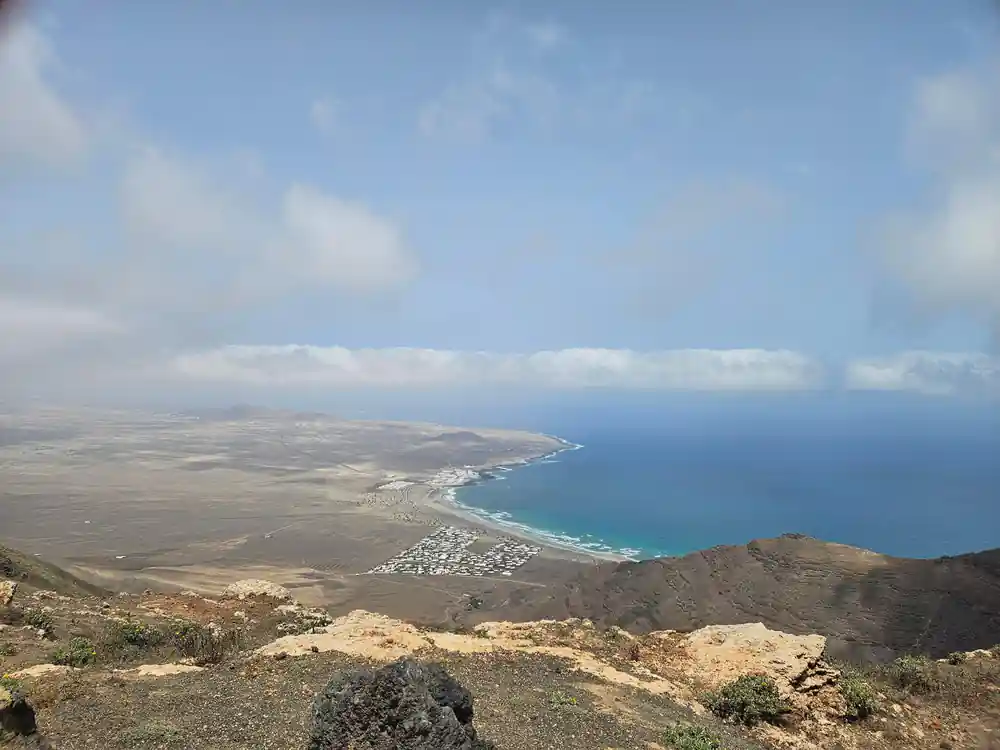
Out among the lava fields, do not count on a phone. Download an offline map of Lanzarote before you leave your accommodation, save the operator's number and the meeting point, and screenshot your booking so nothing has to load on the road. For the northern end of the island, Peñas del Chache is the tallest mountain on Lanzarote and stands 672 meters (about 2,205 feet) above the sea, which makes it a handy landmark on the skyline.[7]
If someone at home is expecting you, send the route and the finish time before you set off, and agree where to meet at the end. Keep the phone charged and warm, because a cold battery in a windy open vehicle drains faster than you expect. And remember that help on this trip is not a call to the emergency services but the guide beside you, who has the vehicle, the radio and the local knowledge to sort out whatever the track throws up.
from US$173
Runs 2 - 3 hours with a live guide and free cancellation up to 24 hours in advance.[1]
Switching to passenger seat if you tire
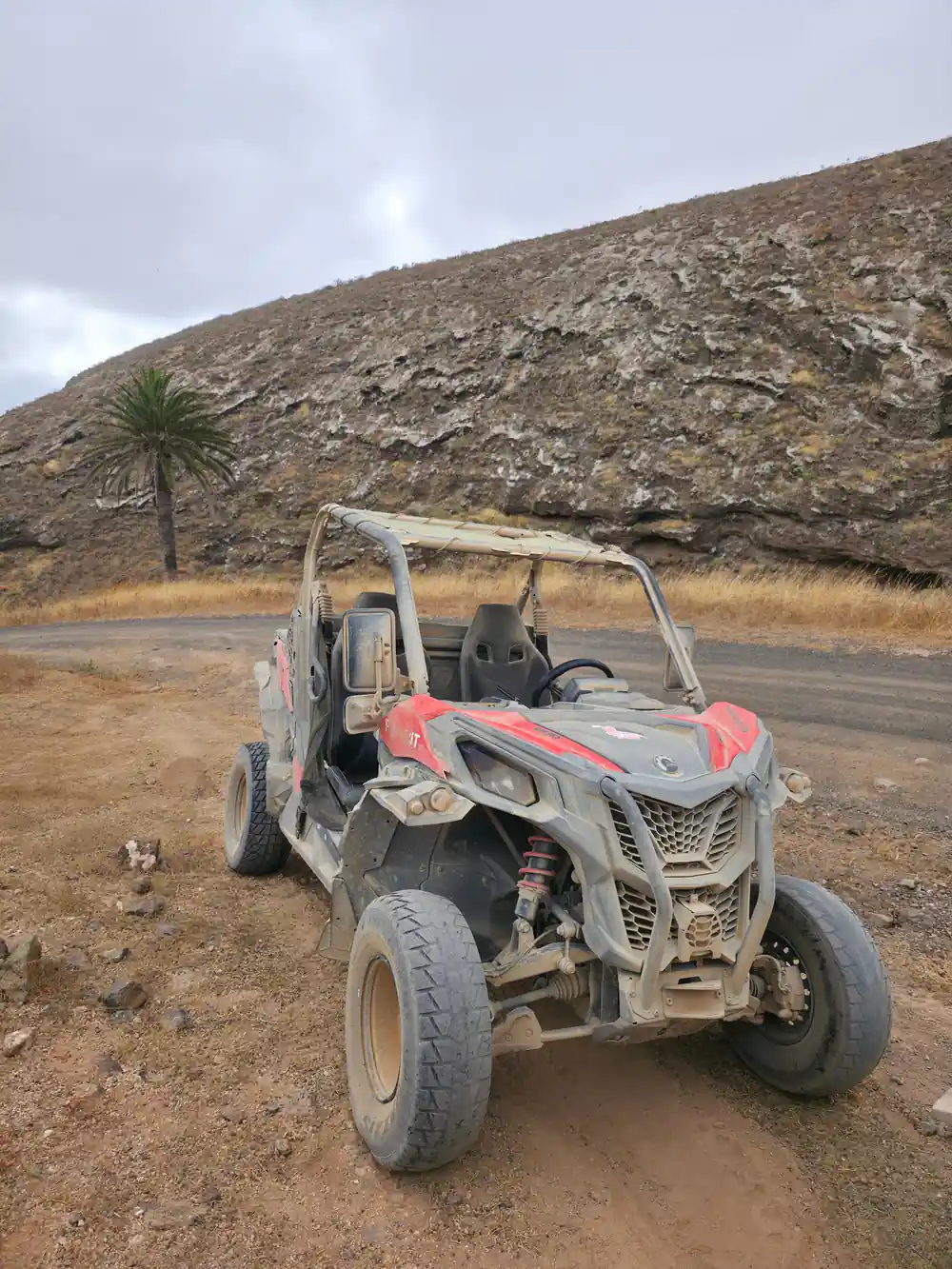
Not everyone wants to drive the whole way, and nobody has to. The Can-Am Maverick X3 DS, for instance, is a two-seat side-by-side vehicle, with the passenger sitting beside the driver rather than behind.[8] Decide before you set off who takes the wheel first, and agree that you will swap if one of you is struggling. Swapping is a quick job at a stop, not something to attempt while the convoy is moving.
Lanzarote is warm right through the year, with an average annual temperature of about 21ºC, and an open buggy at midday feels warmer than that over black lava.[5] If the sun, the dust or the bouncing starts to wear you down, tell the guide at the next scheduled stop and move across. There is no shame in riding as a passenger, and you still get the views, the wind and the photographs without the concentration.
Helmet requirements and safety gear
Head protection is worth asking about when you book, since what is provided is set by each operator. Ask whether helmets, goggles, dust masks and gloves come with the tour or are hired separately, and check the sizes if you have a very large or very small head. On the day, wear whatever helmet you are given properly fastened rather than perched on top, keep the visor or goggles clean, and take a buff or scarf you can pull over your nose and mouth.
Lanzarote sits in the trade winds, which blow steadily from the north-east all year round, though the speed varies, so dust and grit will find every gap in your clothing.[9] Closed shoes, long trousers and layers you can add or strip at a stop work better than shorts and flip-flops. Sun cream on the back of your neck and hands is easy to forget inside an open vehicle, and sunglasses under goggles protect your eyes from both glare and flying grit.
If you wear glasses, take a strap, and make sure a full-face helmet fits before you set off rather than once you are moving. Rings, loose jewellery and long scarves are best left at your accommodation. A small backpack that sits tight against your back is easier to manage than a shoulder bag, and a pouch keeps sand and sweat away from a phone if you want pictures at the stops.
Operator cancellations and rebooking policy
Plans change, and it helps to know exactly where you stand. The guided off-road volcano buggy tour is listed with free cancellation up to 24 hours in advance for a full refund, and with reserve now and pay later, so you can hold a place without paying the full amount straight away.[1] Starting times and pickup options are shown when you check availability, and pickup is available if you would rather not drive to the meeting point.[1]
If the operator cancels, ask for the next date that suits you and get the new time in writing, or take the refund and rebook for another day. If you are the one changing your mind, do it before the free cancellation window closes, because after that the terms on the listing apply. Keep your booking reference, and check the confirmation on the morning of the tour for the pickup time and meeting point.
If you are making your own way, the island is compact. Lanzarote Airport to Puerto del Carmen is 12 km, the airport to Playa Blanca is 33 km, and the cruise berth at Puerto de los Mármoles is 3 km from Arrecife city centre.[10][11][12] That makes it easy to work out how early you need to leave, whether you are coming from a resort, a villa or a ship in port.
GetYourGuide reviews for three Lanzarote buggy tours
Buggy tours compared by from-price
US dollar from-prices from these GetYourGuide listings.[1][3][4][13][14]
When to book and when to cancel
Your safety net
Book flexible terms
Reserve now and pay later, and free cancellation up to 24 hours in advance for a full refund, are listed for this tour.[1]
Check the driver rules
On this tour, drivers need to be 20 or older, with a driving licence held for two years or more.[2]
Agree who drives
Two-seat machines mean one driver and one passenger, so decide before you set off and swap at a scheduled stop if you need a break.
Plan for no signal
Download offline maps and tell someone your route before you leave; treat the phone as a convenience, not a safety line.
Ask about the excess
Check the damage excess, any card hold and what the operator's own cover includes, then photograph the buggy before you drive away.
If plans change
If your plans change, cancel before the free cancellation window closes or ask the operator about another date.
Ready to drive the lava fields?
from US$174Reserve now & pay later