At a glance
- The buggy shifts for you, so your right foot works the throttle and your left works the brake, leaving nothing to master but the gap in front.
- The guided off-road volcano buggy tour runs 2 - 3 hours, and starting times are shown when you check availability.[1]
- Groups are limited to 10 participants, and live guides speak Catalan, English, French and Spanish.[1]
- Drivers need to be 20 or older, with a driving licence held for two years or more.[2]
- Reserve now and pay later, and cancel up to 24 hours in advance for a full refund.[1]
- Top choice Off-Road Volcano Buggy Tour from US$173 Duration2 - 3 hours[1]Rating4.67 from 5,246 reviews[1]Guide languagesCatalan, English, French, Spanish[1]Free cancellationCancel up to 24 hours ahead[1] Check availability
- Can-Am Trail Buggy Tour from US$196 Duration3 hours[3]Rating4.54 from 243 reviews[3]Guide languagesEnglish, Spanish[3]Free cancellationCancel up to 24 hours ahead[3] See this tour
- On-Road Buggy Volcano Tour from US$207 Duration2.5 hours[4]Rating4.58 from 627 reviews[4]Guide languagesEnglish, Spanish[4]Free cancellationCancel up to 24 hours ahead[4] See this tour
Thanks to its geographical situation, Lanzarote possesses a warm climate throughout the entire year, with an average annual temperature of about 21ºC .
Is the buggy drive worth it?
Before you drive
Automatic Transmission: No Clutch to Master
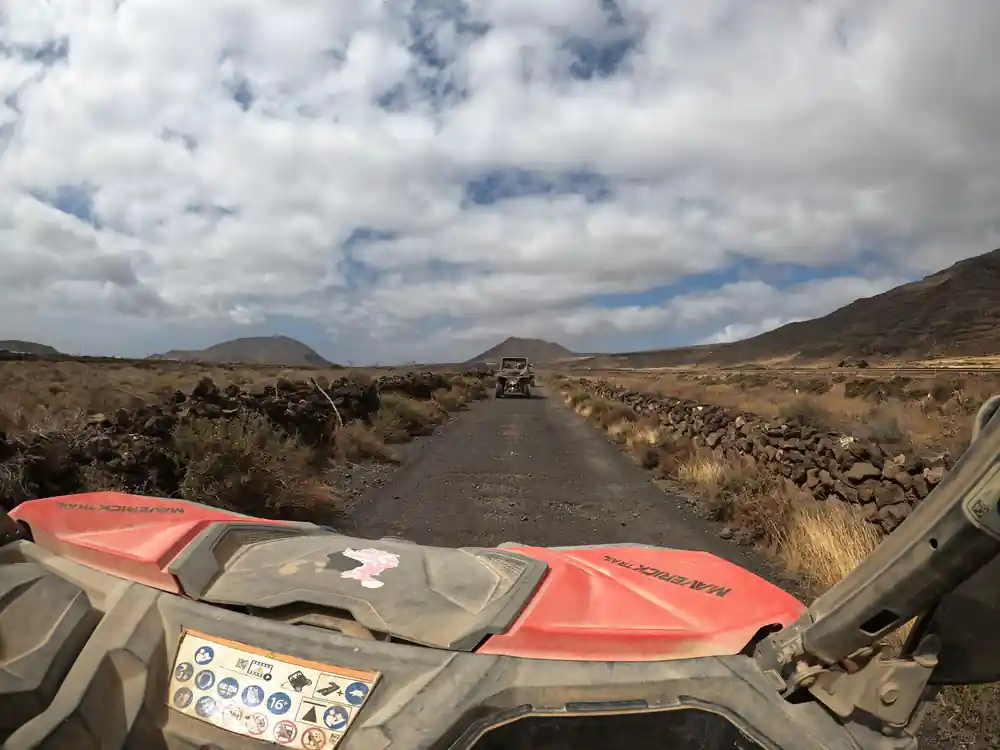
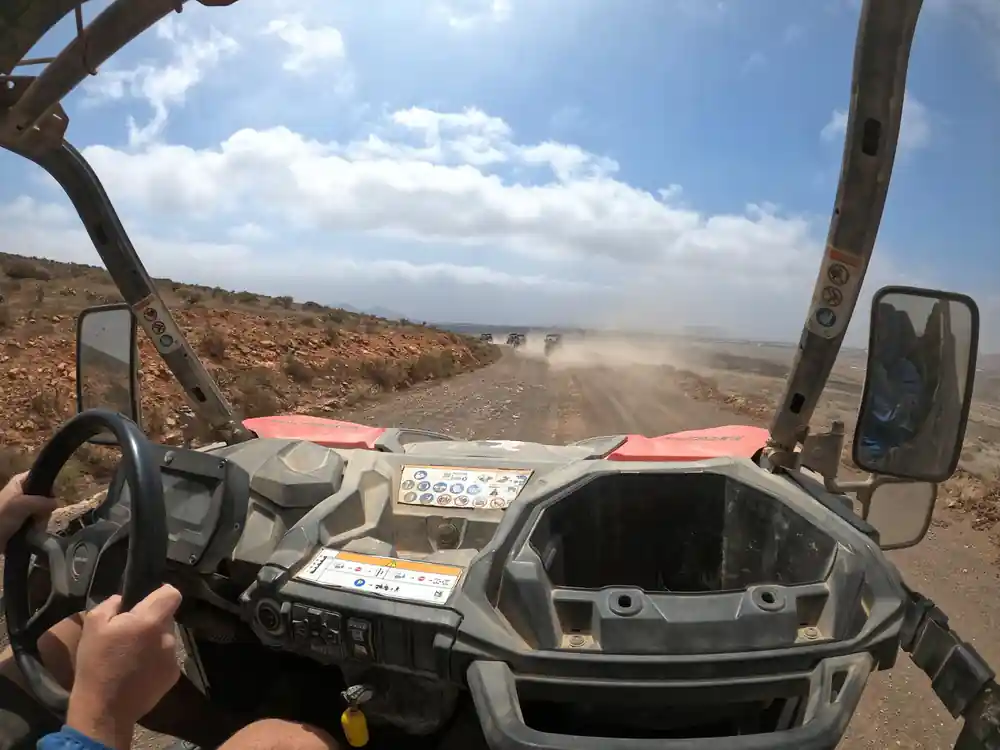
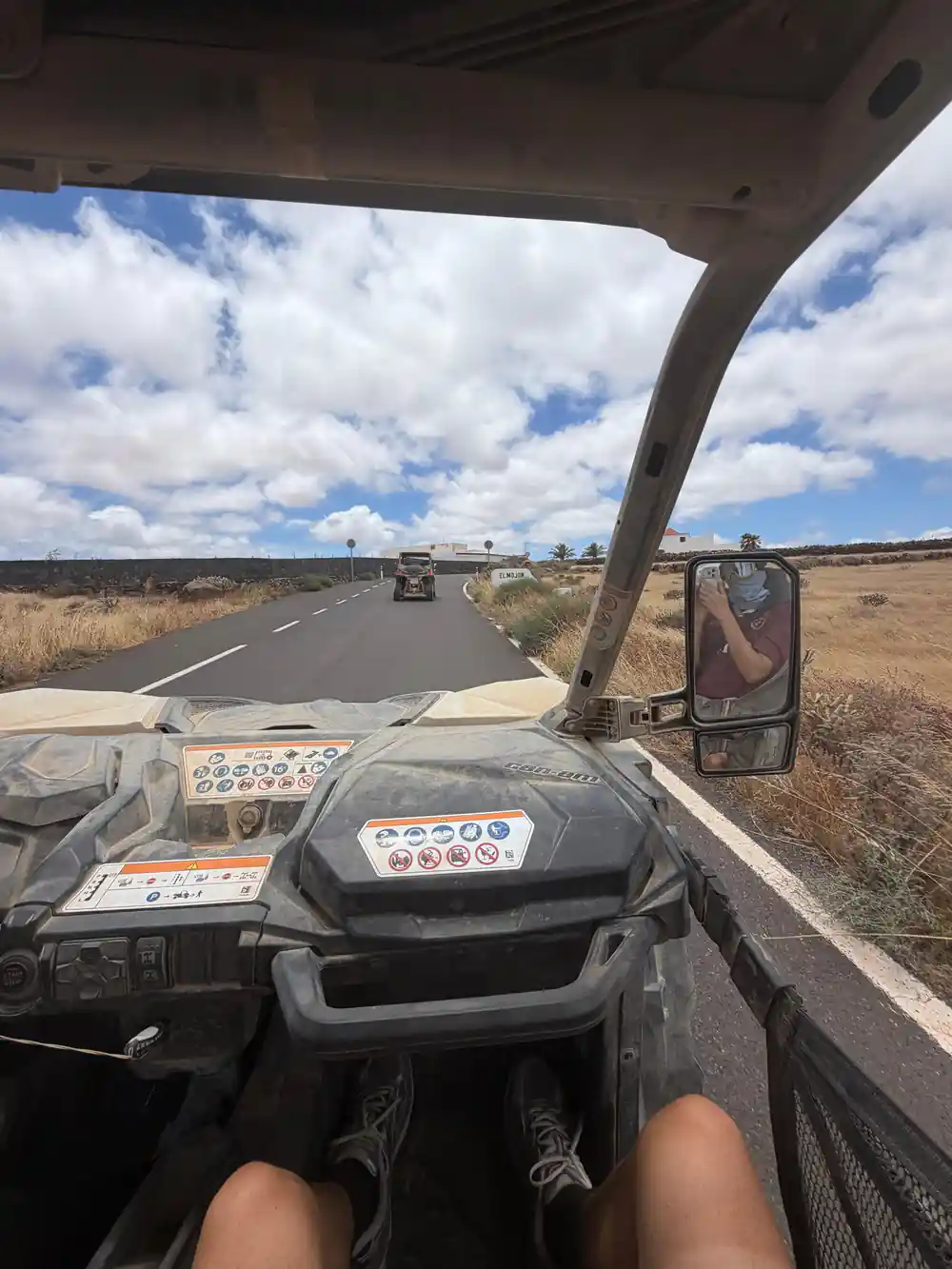
There is no clutch pedal and no gear lever in the buggy. You sit in a bucket seat with a harness over your shoulders, hands on a small steering wheel, right foot on the throttle, left foot on the brake. That is the whole control set. The gearbox shifts for you, so nothing stalls and nothing lurches when you lift off, and the machine will roll away from a standstill on the gentlest squeeze of throttle. If you can drive an automatic car smoothly at walking pace, you already have everything this buggy asks for.
If you have booked an off road buggy tour, Lanzarote will hand you surfaces you have probably never driven on: loose lapilli, packed ash, gravel scattered over hard rock, and short stretches of ordinary tarmac between them. The buggy is forgiving on all of it, but it is light, the tyres are small and the ground moves under you. A heavy right foot on a downhill bend is the one thing that unsettles it. Keep the throttle gentle, brake early, steer with small inputs, and let the automatic box do its work.
Your First Minutes: Finding the Pedal Feel
Your first minutes matter more than the rest of the drive. Pull away slowly, feel how little throttle the buggy needs, then brake twice on a clear stretch so you know how much pedal travel there is before it bites. Everything about the machine is light: the steering, the throttle, the brake. Give yourself a few minutes of gentle driving and the overthinking stops, which is usually when the fun starts.
Before any of that, your guide runs a briefing on the convoy order and the signals. The guided off-road volcano buggy tour is led by a live guide who speaks Catalan, English, French and Spanish.[1] Groups are limited to 10 participants on this listing.[1] The drive itself runs 2 - 3 hours, with starting times shown when you check availability.[1] Pickup is available, and you can check availability for pickup options when you book.[1]
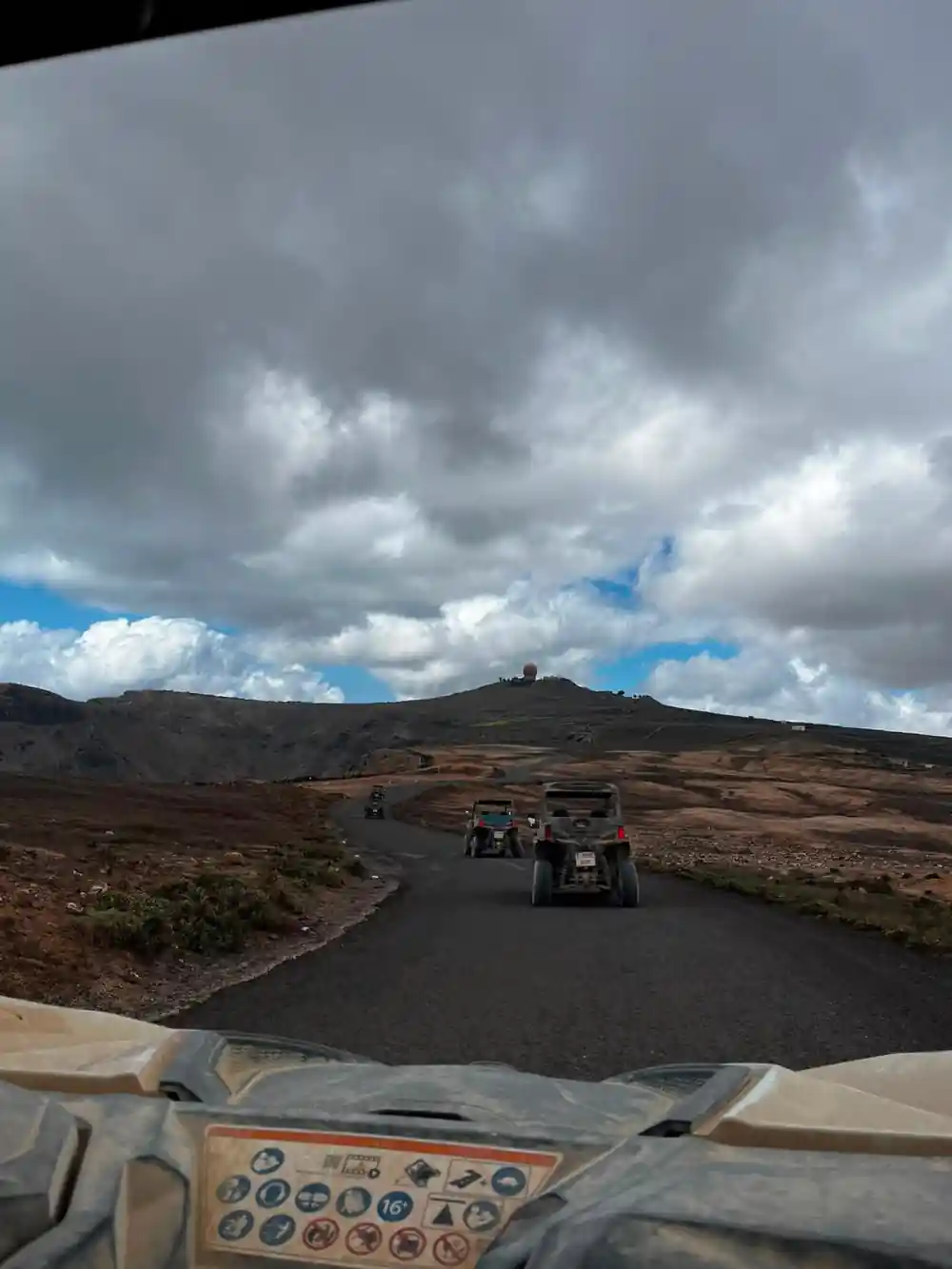
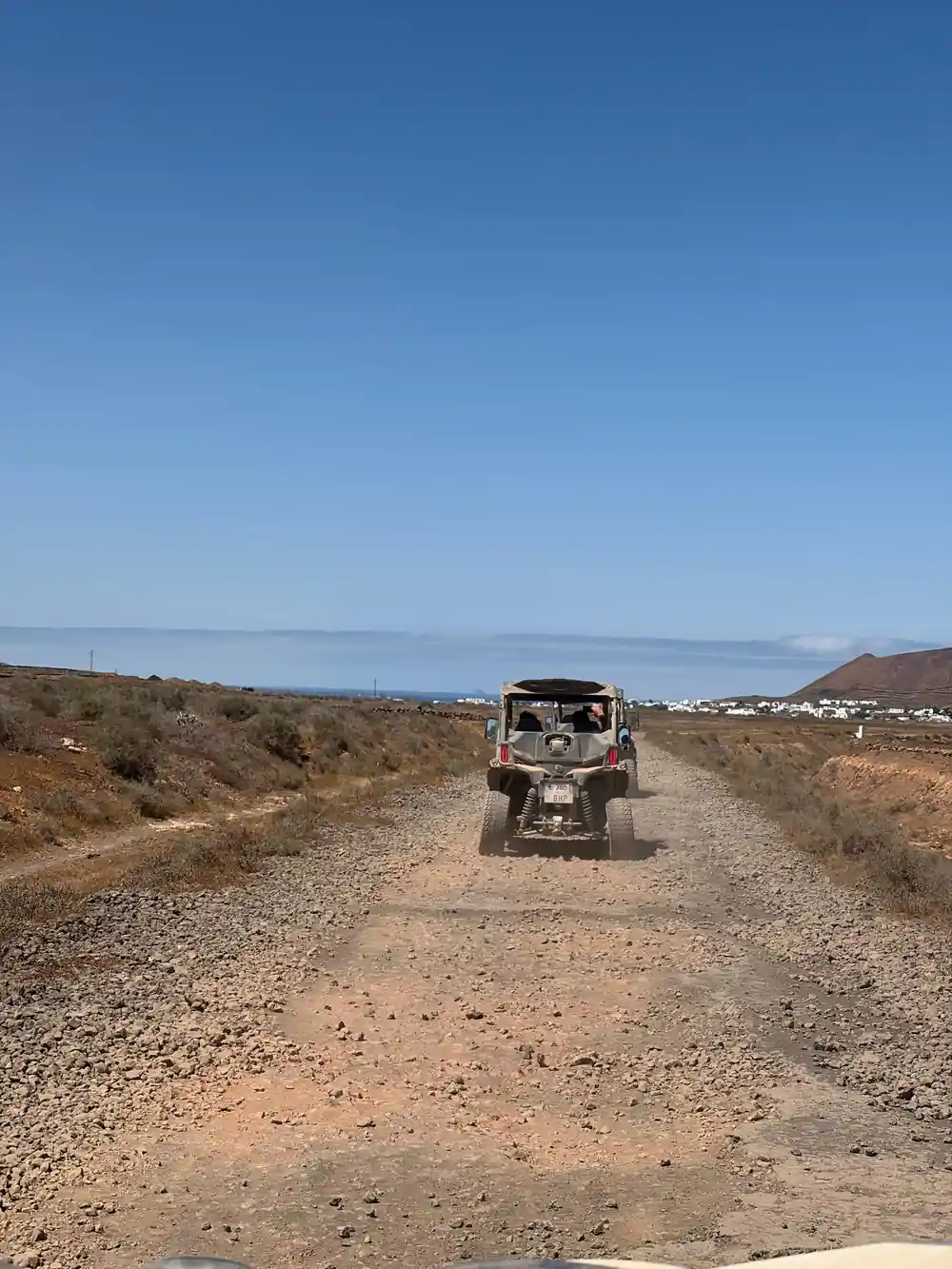
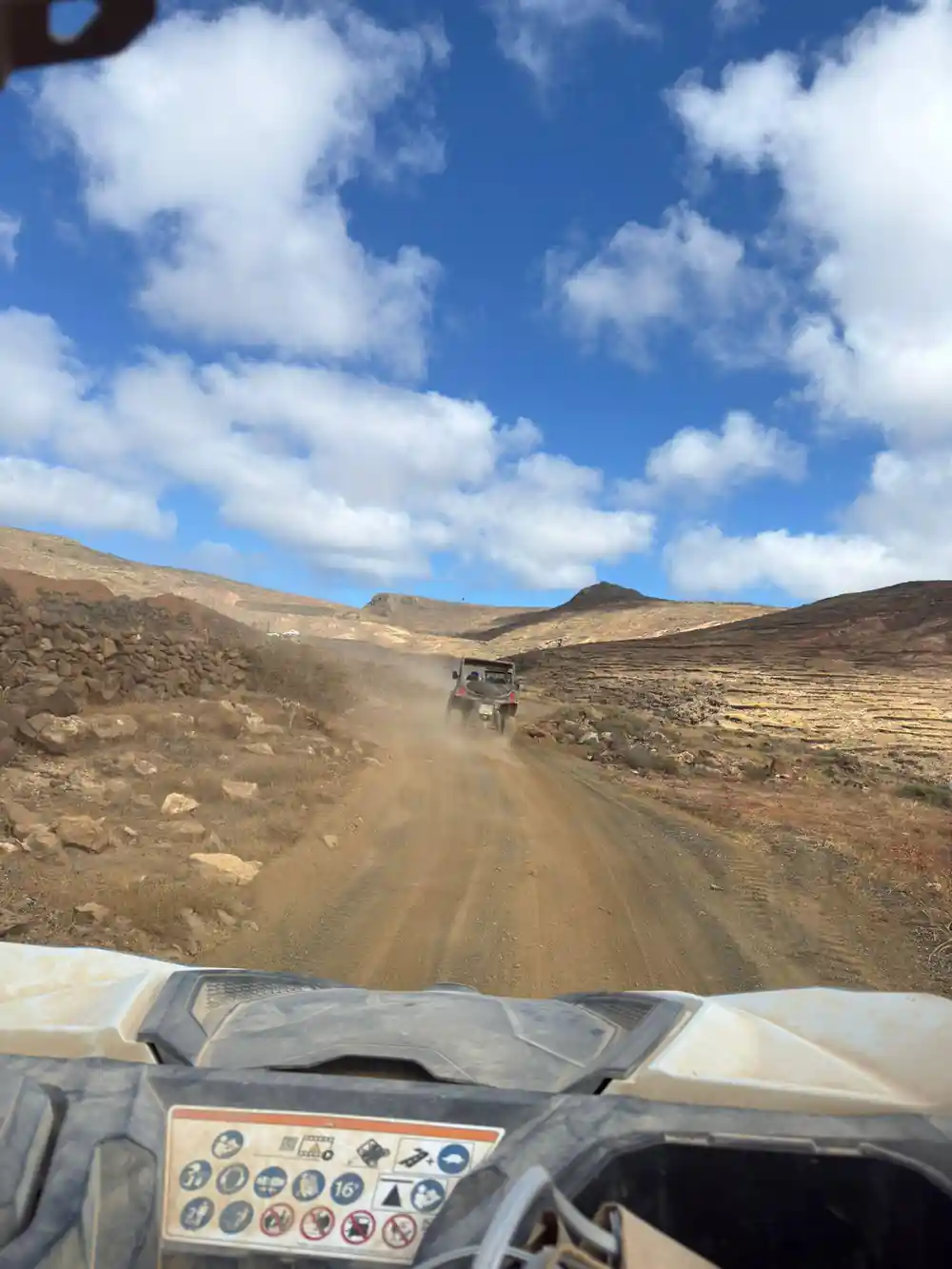
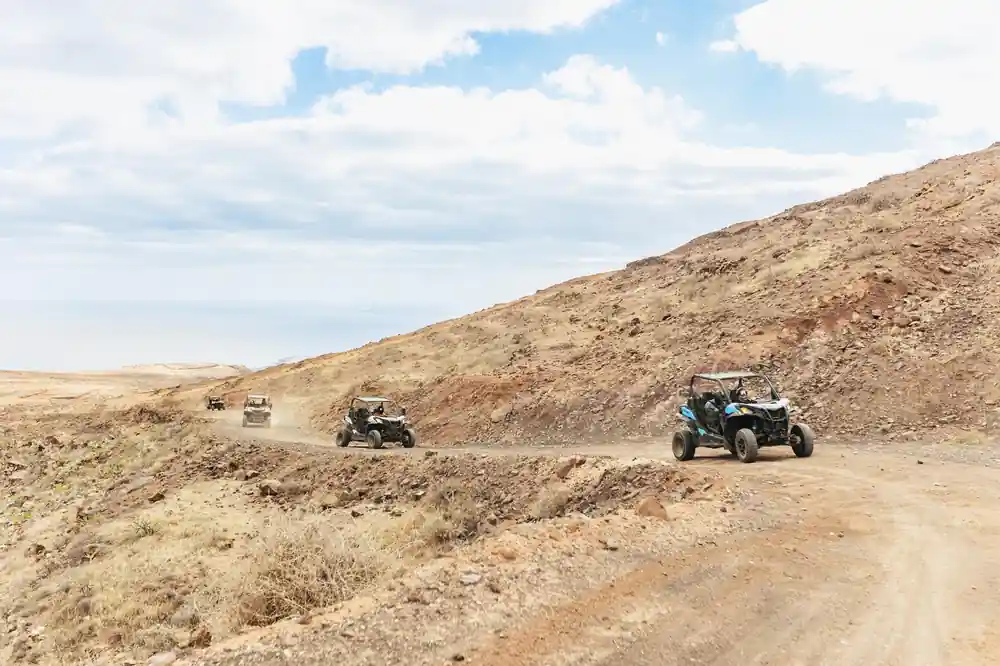
Dust trails rising behind the convoy on the volcanic desert track.
Road Speed Versus Track Speed: Where the Terrain Changes
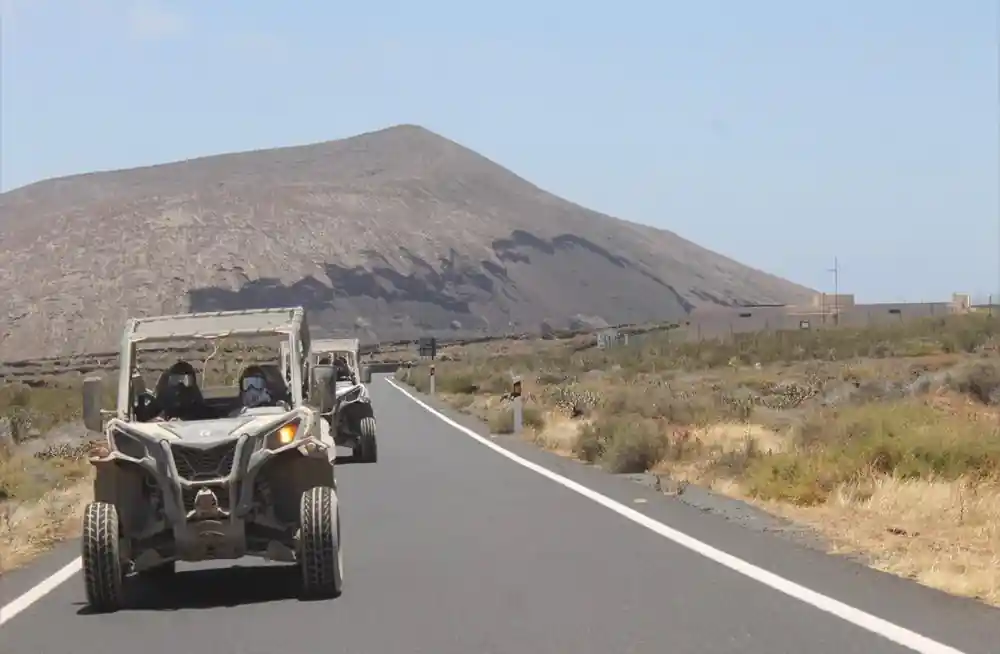
Buggy routes mix link roads with unpaved tracks, and the two feel completely different. On tarmac you sit in a normal convoy, keeping pace with traffic and taking bends at road speed. On the track everything slows: the surface shifts under the wheels, the steering tugs, and the dust plume from the buggy ahead becomes part of the view. The change is usually obvious, because the tarmac simply runs out and the landscape opens.
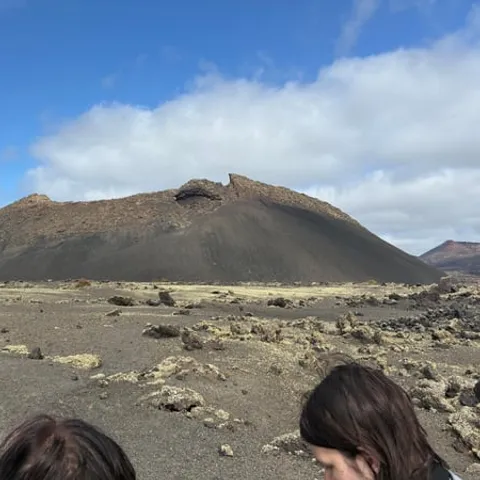
That landscape is young. The Timanfaya eruption lasted six years and covered 23% of Lanzarote in fresh lava and spatter.[6] Inland, La Geria grows its vines in pits dug into volcanic ash, a centuries-old method that uses the properties of that ash.[7] The rock under your tyres was laid down in one long eruption, not over geological ages.
Speed is worth thinking about in two separate ways. Road speed is the pace of the convoy on tarmac, where you follow traffic rules and keep your distance. Track speed is slower and more deliberate, judged by how much you can see and how much grip you have. If the dust ahead is thick or the surface is loose, the right answer is nearly always less throttle, not more.
The Volcanic Surface: Dust, Texture, and Grip
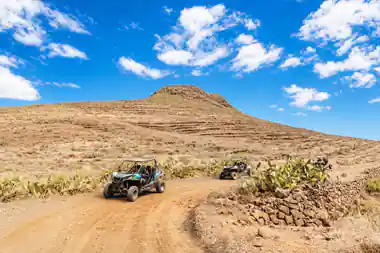
Volcanic ground is many surfaces in one. There is pale fine ash that lifts into a long tail behind each buggy, coarser black lapilli that rolls under the tyres, and compacted tracks where years of traffic have polished the top layer into something slippery. Grip changes between them without warning. Follow the line the guide takes, leave a gap so you can see, and do not cut inside a bend looking for a smoother path, because the smoother looking path is often the looser one.
Dust does almost nothing to the driving and a lot to your clothes. Sunglasses, a light scarf or buff over your mouth, and clothes you can rinse out are the practical answer. Lanzarote has a warm climate throughout the entire year, with an average annual temperature of about 21ºC.[5] The island sits in the trade winds, which blow steadily from the north-east all year round, though the speed varies.[8] Both are worth knowing when you are sitting in an open frame for a couple of hours.
from US$173
The guided off-road volcano buggy tour runs 2 - 3 hours with groups capped at 10 participants, and pickup is available.[1]
Cliff-Edge Sections and Safe Convoy Spacing
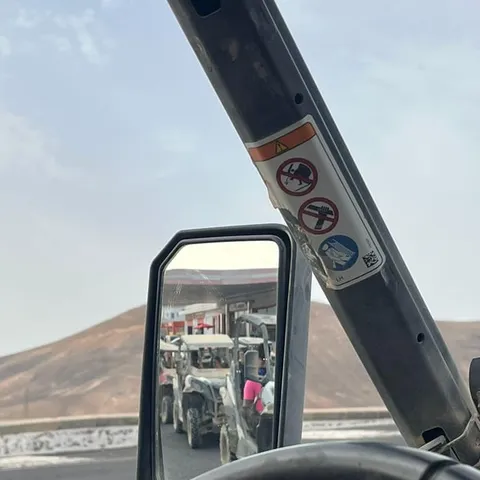
On coastal and cliff-edge sections, spacing stops being a courtesy and becomes the whole point. Keep well back from the buggy in front, far enough that you are not breathing its dust and close enough that the convoy stays together, and never close the gap to get a better view. If you want to look at the sea, wait for the next stop. The guide sets the distance and the pace, and following that rhythm is the easiest way to have a relaxed drive.
The south-west coast earns the attention. Los Hervideros is a stretch of dramatic black lava cliffs where the Atlantic surges into a labyrinth of sea caves and blowholes and appears to boil among the rocks.[9] Near Yaiza, the crater of an extinct volcano submerges into the Atlantic and forms the Charco de los Clicos, also known as the Green Lagoon, a Natural Reserve.[10] Inland, Peñas del Chache stands 672 meters (about 2,205 feet) above the sea.[11]
Staying Connected: Communicating With Your Guide
The guide is your eyes on the road ahead. Over the engine you may not hear much, so watch the vehicle in front and the guide's signals. A raised hand means slow down or stop, a wave forward means go, and a pointed finger usually means look at something on the far side of the track. Keep your eyes moving between the buggy ahead and the surface just in front of your own wheels.
If you need to stop, ease off, pull to the side of the track and let the convoy pass, rather than braking where everyone behind you is committed to your line. A small group makes all of this simpler: the guided off-road volcano buggy tour is limited to 10 participants.[1] It is rated 4.67 from 5,246 reviews, with a guide score of 4.7.[1] Reserve now and pay later is available, and you can cancel up to 24 hours in advance for a full refund.[1]
Driver Swaps: Sharing the Wheel Mid-Route
If two of you want a turn at the wheel, plan the swap before you set off rather than halfway round a bend. On a buggy it is easy: stop where the guide indicates, unbuckle, walk round, reset the harness and the mirrors, and set off again. Whoever takes the wheel has to meet the rules. Drivers need to be 20 or older, with a driving licence held for two years or more.[2] Bring that licence with you on the day.
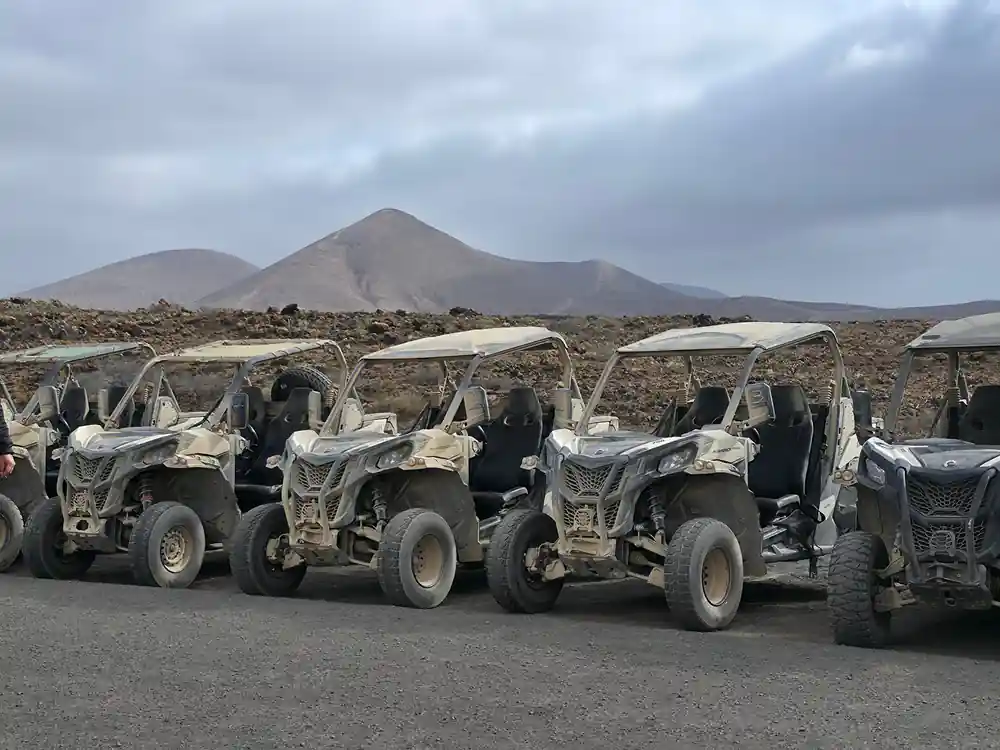
The buggy vs ATV question is worth settling before you book, because the two machines give you different days. A buggy seats two people side by side behind a roll cage, so one drives while the other watches, and you can swap. A quad is ridden like a motorcycle, one rider to a machine, though no guided quad tour is listed with our partners right now, so on a guided day in Lanzarote the buggy is the machine you will drive.
Prices for the drive itself start higher for buggies. The guided off-road volcano buggy tour is from US$173.[1] A guided Can-Am trail buggy tour is from US$196[3] and an on-road guided buggy volcano tour is from US$207.[4] Whichever you choose, the licence rules for the driver stay the same.
Distances that shape a Lanzarote buggy day
Road distances for planning your base and your transfer.[12][13][14]
Buggy tour from-prices
US dollar from-prices of these GetYourGuide buggy listings:[1][3][4][15]
When to book your buggy drive
Your drive, step by step
Briefing and harness
Your guide explains the controls, the convoy order and the signals before you set off. Ask about anything you are unsure of while the engine is still off.
First pedal feel
Pull away gently and brake twice on a clear stretch so you learn how much travel there is. The steering is light and the throttle needs little input.
Onto the tracks
The surface changes from tarmac to loose ash and lapilli. Keep the guide's line, leave a gap for the dust, and brake earlier than you would on a road.
Coastal and cliff sections
Spacing matters most here. Hold your position in the convoy, do not close up for a better view, and wait for a stop if you want to look at the sea.
Swap and return
If you agreed to share the drive, swap at a stop signalled by the guide. Check the harness, then set off last so you are not rushing to catch up.
Ready to take the wheel on the volcano tracks?
from US$174Reserve now & pay later